Meniscus
Built at Meta Global AI Developer Hackathon · Oct 26, 2026 · Remote
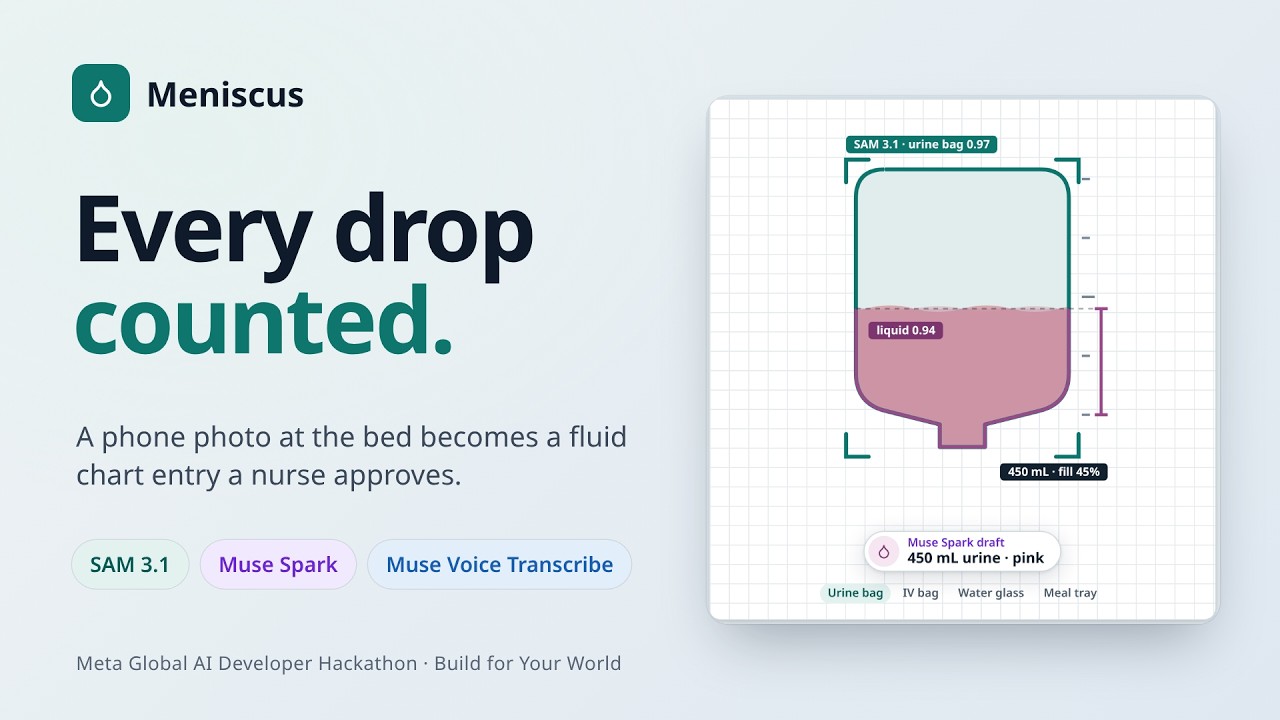
Meniscus: every drop counted. I was in hospital recently with a subdural hematoma and spent most of the stay in bed. Automatic urine monitoring was too expensive, so it wasn't used for me. My intake and output weren't written down properly, my chart looked wrong, and I was sent for infection tests I didn't need. I kept thinking there had to be a simpler way. It isn't just me. A 2023 review in BMJ Open Quality looked at 23 studies with 6,649 patients. In 10 of the 18 studies that checked, half or fewer of the fluid charts were complete. On one US ward, charted intake and output matched the patient's weight change only 15% of the time. In Kent, England, a coroner found a patient's fluid charts were filled in wrongly and her 3.5 litre fluid overload was only noticed close to her death. Inspectors later found fluid records at two of that trust's hospitals "consistently incomplete or not completed at all". Food charts are worse: one hospital study found 93% of them incomplete. Automatic urine monitors do exist, but they cost thousands. The UK's NICE lists one at £3,810 per unit plus £65 per patient, compared with £8 to £10 for a normal urometer, and it is meant only for intensive and high dependency care. What I think should happen. Very sick patients should have their intake and output tracked properly, meals included. Until that is cheap enough for everyone, private and premium rooms should at least offer it. Bad charts lead to wrong decisions and wasted tests and money. What Meniscus does. It only needs a phone. The person at the bed scans the bed's QR card and takes a photo of the urine bag, jug, cup or meal tray, or just says it in a voice note. Meta's models (SAM 3.1, Muse Spark 1.3 and Muse Voice Transcribe) draft the entry, for example "about 450 mL urine". The attendant checks it and saves it. It then goes to the nurse with the photo, the time and who logged it. The nurse can see the outlines the model drew on the photo and approve entries in batches. Nothing counts until a nurse approves it. Simple rules raise prompts that always say "review", never a diagnosis. They catch low urine output, fluid overload, gaps in logging, and the case that happened to me: low output while plenty of intake is logged, so the prompt says to check the measurement before ordering tests. Muse Spark can explain any prompt in plain words. Nurses get a ward dashboard with each bed's 24 hour balance, urine output per kg per hour, care plan orders like fluid limits or nil by mouth, and a printable chart. Dietitians get a worklist and a 3 day food chart built from the same tray photos. Every number has a photo and a name behind it.