Herbarium Label Transcriber
Built at Meta Global AI Developer Hackathon · Oct 26, 2026 · Remote
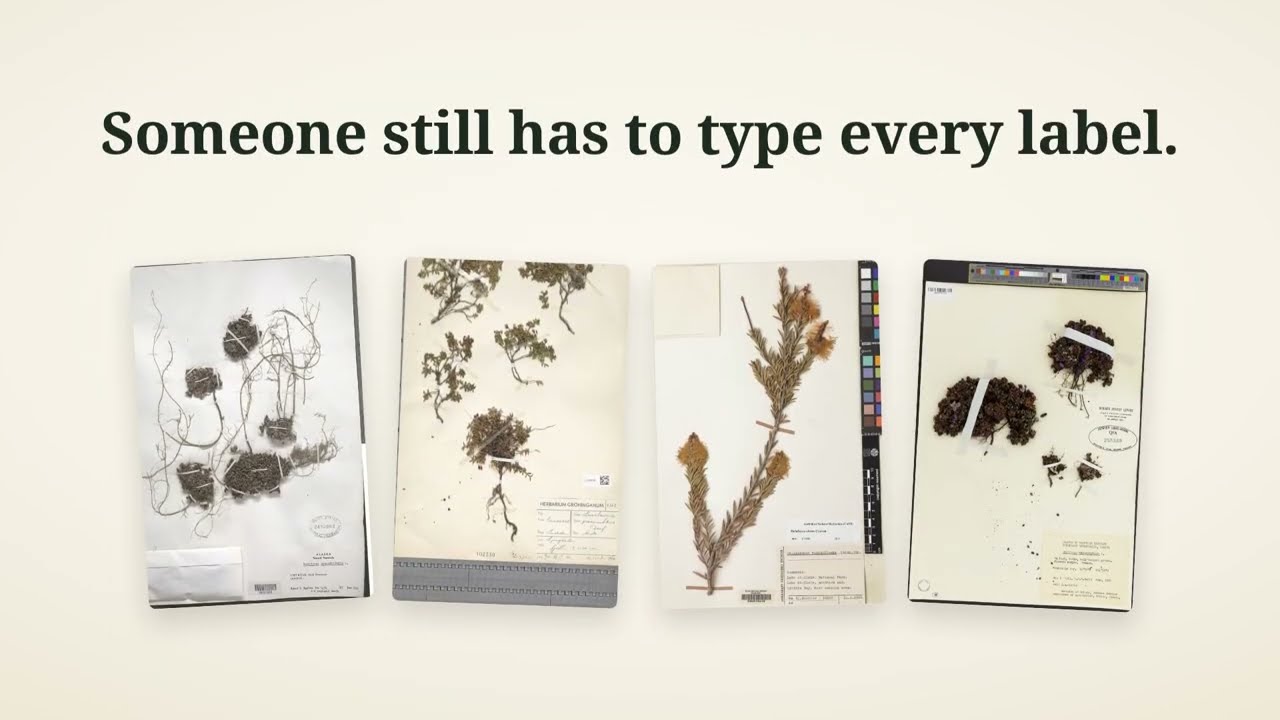
Museums hold about 400 million pressed plant specimens, a 200-year record of where life on Earth grew and where it is disappearing. Digitized specimens are already the raw data for climate research (8 million of them showed plants flowering ~2.5 days earlier per decade), yet fewer than 1 in 6 has been digitized, because a person still has to type every label by hand: old handwriting, Latin, abbreviations, re-identification slips glued on top. Volunteers manage about 10 records an hour. Herbarium Label Transcriber is an agent that turns a photo of a herbarium sheet into a verified, standards-compliant museum record: 1. Segment: SAM 3.1 concept prompts find every label, annotation slip, stamp, barcode and ruler; each region is cropped at full resolution and becomes the provenance anchor for what is read from it. 2. Read: Muse Spark transcribes each crop verbatim, preserving spelling and abbreviations. 3. Interpret: a separate Muse Spark call maps the transcripts to Darwin Core (the standard GBIF and collection databases import). Every field must quote the exact text it came from, so it links back to a character span on a specific label and hallucinated text fails a grounding check. 4. Verify: a bounded agent checks species names against the GBIF Backbone Taxonomy (catching outdated names and recording the accepted name), checks dates for plausibility and consistency, and resolves countries. When a check fails it asks Muse Spark a targeted question about that exact crop ("is the year 1897 or 1891?"), at most twice per field. Every step is logged and shown as an agent trace. 5. Review: confidence comes from evidence, not self-report. A curator reviews only flagged fields side by side with the sheet, clicks a field to highlight its source, accepts or edits, and exports Darwin Core CSV. Example: on a 1960 Swedish sheet, the label reads Loiseleuria procumbens; the agent finds via GBIF that botanists moved it to Kalmia procumbens, keeps the original as museums require, and records the accepted name. We measured it: 50 frozen GBIF sheets from 10 countries, 4 ablations (whole sheet, + SAM crops, + verification agent, + second reading), scored field by field against human transcriptions, with every failure published in the repo. About 20 seconds and $0.04 per sheet. The goal is not to replace curators but to move them from typing to reviewing.