Open Book Studio
Built at Meta Global AI Developer Hackathon · Oct 26, 2026 · Remote
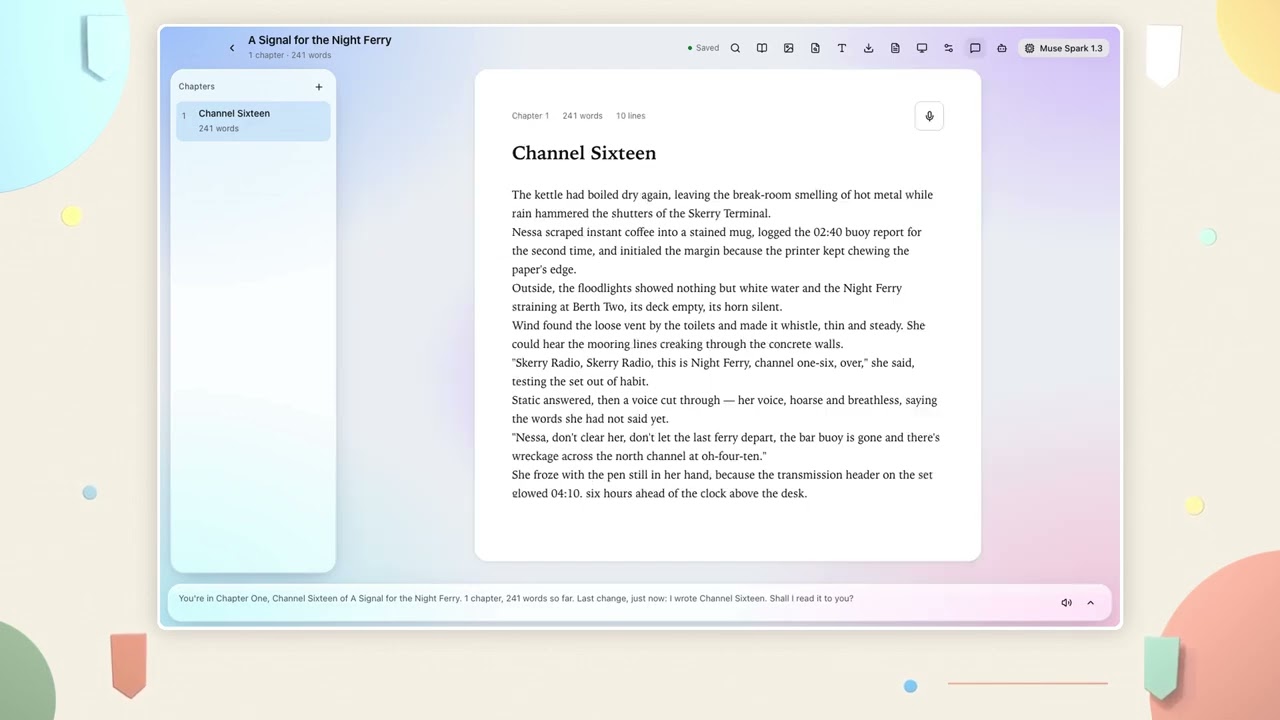
Open Book Studio helps authors turn an idea into a manuscript without surrendering ownership of their work. Writing a book usually means juggling a word processor, scattered notes and disconnected AI chats. The studio keeps those pieces together: a manuscript editor, chapter navigation, a Story Bible, characters, memories and an agent that works on the actual book. Each book is an ordinary folder of Markdown and JSON. The author can choose a local folder or one managed by their existing cloud-drive software. The desktop app owns the file writes; saves check the version and content hash, preserve conflicts, use atomic writes and offer approval gates and turn-level undo. Provider credentials stay in operating-system-protected storage rather than the manuscript. Meta models power drafting, revision, chapter illustration and speech recognition. In the demo, Muse Spark 1.3 creates four opening chapters, revises The Cartographer's Tide, and leaves the author free to edit and export the result. Formatting supports title pages and ordered front/back matter, with Word, Markdown, PDF and EPUB export on desktop. A local CLI and MCP server let other agents use the same checked tools. The shared interface also has responsive browser layouts and an iOS Capacitor shell. Signed desktop/mobile distribution, Android, character/narrator voice casting and audiobook creation are roadmap work, not released features. Store links will appear in the repository when ready. This is a fresh local-first rewrite of an earlier writing-app idea, developed with Spec Kit specifications, plans, decisions and verification. Earlier concepts/designs and the dated pre-event code baseline are disclosed in SUBMISSION.md; the public history distinguishes that baseline from event work. The core promise is simple: your story, your files, with useful AI assistance inside the writing workflow. Apache-2.0 source is public. Each generated response remains attributed to the model that actually produced it. This is an authoring tool, not a claim of autonomous publishing. Verification includes more than 2,000 automated checks and hidden real-app checks; the repository records the scope and limits of those results. The manuscript remains usable without an AI connection. Users choose when their text or audio is sent to a provider. A first-class, local writing experience comes before accounts, hosting or lock-in. No studio service stores a server-side copy of the book. This makes the app useful to independent writers who want modern assistance and durable, inspectable work. We aim to make the first spark of a story easier to develop into a book the author can actually keep.