LotFit
Built at Meta Global AI Developer Hackathon · Oct 26, 2026 · Remote
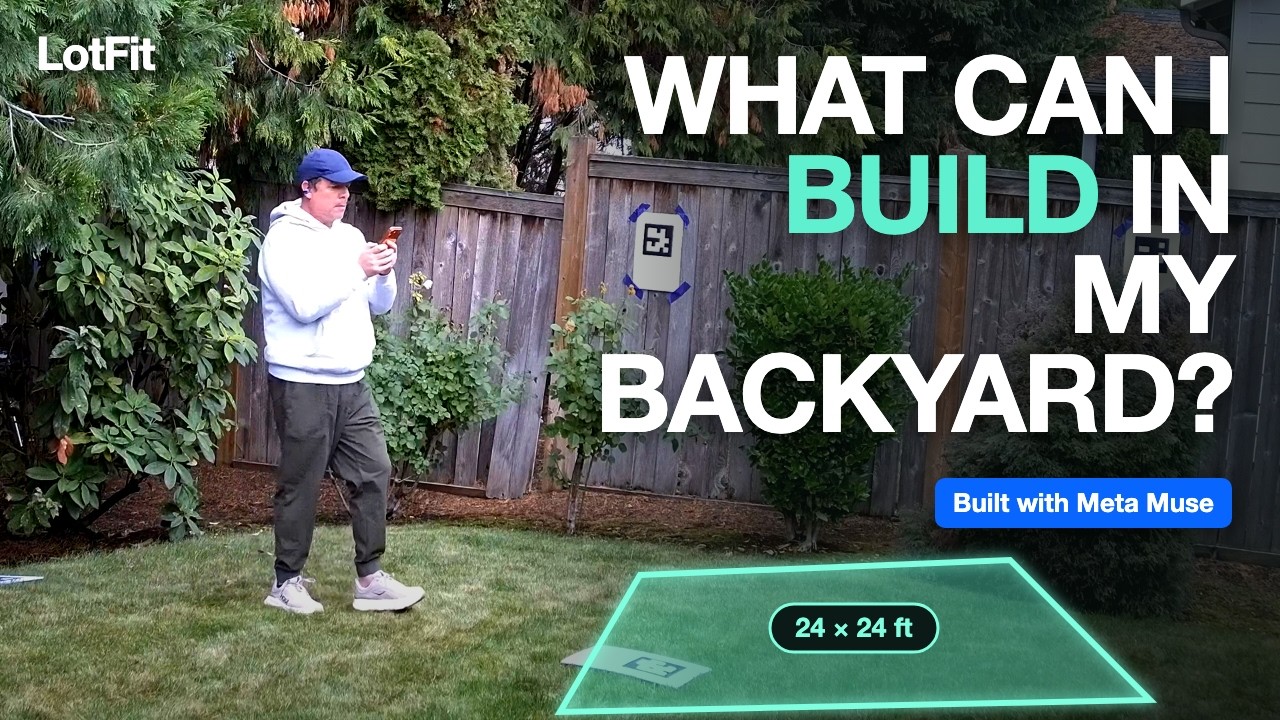
Could a small second home go in my backyard? A cottage to rent out, a home for a parent or a relative. Most homeowners never find out. The answer is spread across the city's zoning code, the county's records and the real yard, and putting them together takes weeks and thousands of dollars. LotFit puts them together in minutes, for cents, and shows its work. 1. Scan. Walk the yard with a phone with LiDAR and a few printed markers. The walk becomes a metric 3D model of the lot, with an error bar on every measurement. 2. Read the code. The zoning code lives in LotFit as a knowledge graph, not as text: every provision, clause and numeric limit, each with its verbatim words and its source. 3. Decide. A Meta Muse agent plans which rules apply to this lot and this cottage, then calls measuring tools. Deterministic code compares every measurement with every limit. Models propose; code decides. 4. Answer. Fits, fits if, no, or too close to call. Each finding cites the exact clause, the measured value and the limit. A second Meta Muse model reviews the whole answer. The rule that matters: when the margin is smaller than the scan's own error, LotFit never guesses. It says "too close to call: tape this dimension", and names it. In our own backyard, the scan found the rear lot line 6.26 ft away from where the county record puts it. That alone moves where a cottage can go, and it is the kind of thing nobody finds until a permit is refused. What we built during the hackathon: - a web app: the case, the 3D scan, the agent working live, the answer, every check, and a narrated 3D walkthrough of the answer; - a Rulebook knowledge graph on Neo4j: 5,171 nodes, 9,568 relationships, 2,074 clauses and 837 numeric limits, each with its source; - an agent harness that refuses a bad case before it runs, records every model and tool call, and writes a replayable decision trace; - a verifier, a sensitivity test (would moving any measurement within its error flip the verdict?) and a model reviewer; - a Muse Glimmer model fine-tuned only on runs our verifier accepted; - 1,120 automated tests. Who it is for: homeowners deciding whether to build, the designers and builders who quote them, and the cities that answer the same question at the counter every day. A new city is data, not new software: two cities already run on the same engine.