Glassistant
Built at Meta Global AI Developer Hackathon · Oct 26, 2026 · Remote
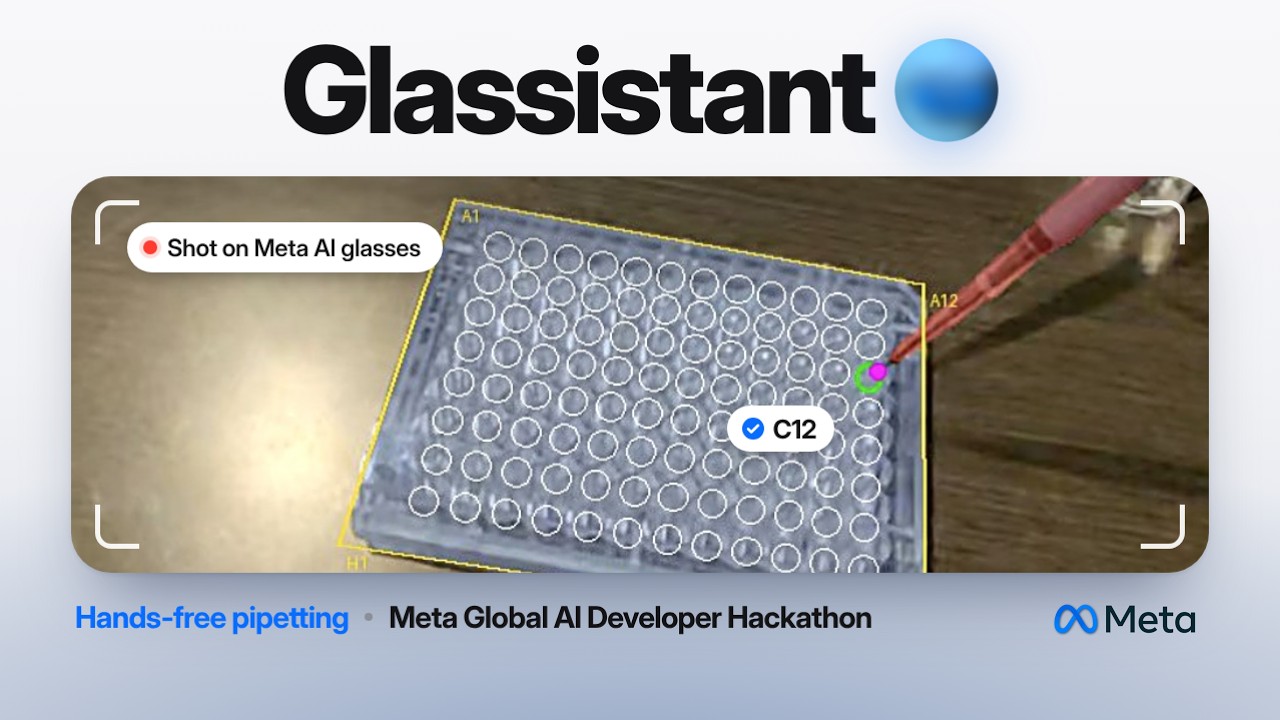
I studied biotechnology and spent a lot of my days at the bench pipetting. You have gloves on, both hands are busy, and inside a clean bench you can't touch your notes or a screen. So you write everything down afterwards, from memory. When we talked to 6 biology PhDs and lab researchers, we heard the same story again and again. One told us: "When I seed cells, I sometimes forget which wells I've done. I skip the unsure ones, check under the microscope, and seed them again." And when a lab automates that work later, the robot repeats the plan, not what actually worked. So we built Glassistant: a hands-free lab assistant on Ray-Ban Meta glasses. Everything was built from scratch during the hackathon, in 9 days, by the two of us. You put on the glasses and run your experiment. You can talk to Milo, our agent ("B2 to B4 done", "start a thirty-minute timer and note that C3 looked cloudy"), or just pipette. Through the glasses, SAM 3.1 tracks the plate and the pipette tip and marks each well as you fill it. When it isn't sure, it doesn't guess. It asks "Did C4 go in?", and your answer always wins over vision. When the run ends, Glassistant shows what changed from the plan and turns what actually happened into Opentrons Flex robot code. Muse Spark writes the code, the Opentrons simulator runs it, and our own checker compares every step, well, volume, tip and wait against your record. If something fails, Spark fixes it and tries again. One AirDrop and protocol.py is on the lab computer. For labs whose protocols can't leave the building, Private mode runs the same agent on Muse Glimmer, which we host ourselves, so the run record never goes to the Meta Model API. Judges can try it without glasses, a Meta account or an API key: the repo runs on the iPad simulator with Meta's Mock Device Kit. The demo video was filmed live through the glasses with a real plate and pipette.