umwayi
Built at Meta Global AI Developer Hackathon · Oct 26, 2026 · Remote
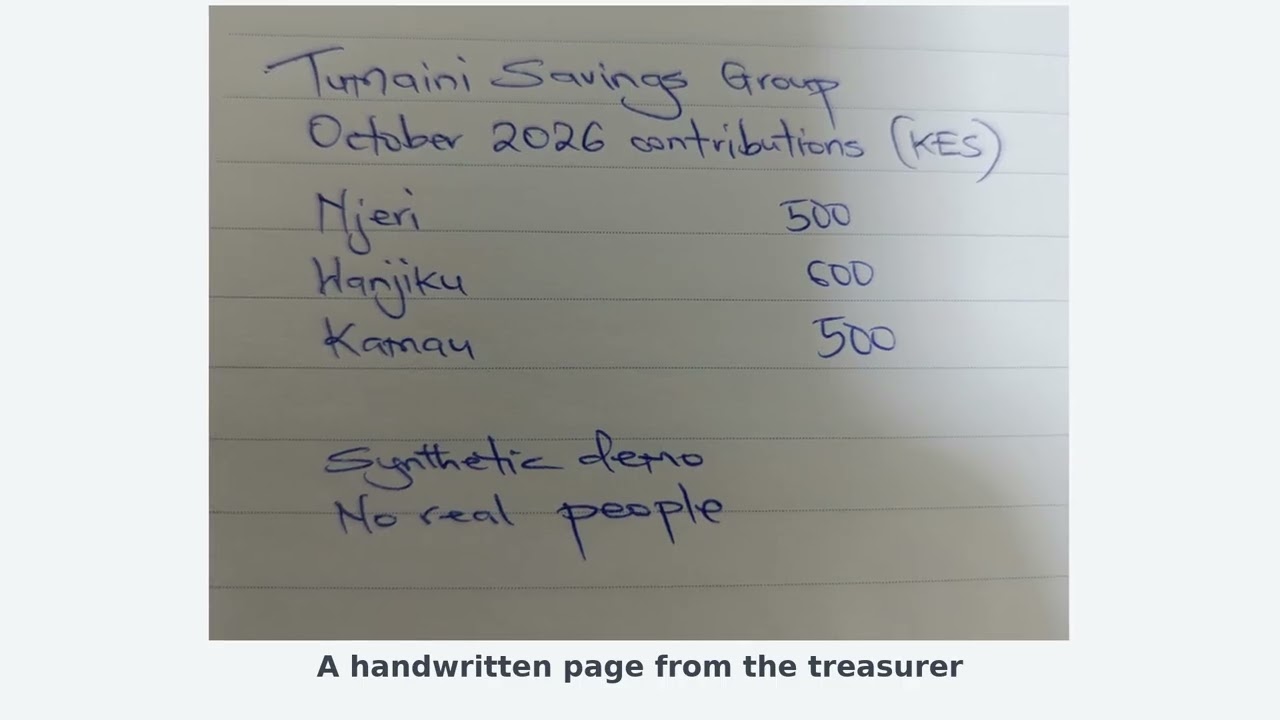
Umwayi-RM is an open source secretary for savings groups (chamas). Treasurers keep records on paper and in chat messages, where names collide, months go missing and totals disagree. After a meeting, the treasurer sends a voice note or a photo of the paper page. The agent returns proposals. It never writes the ledger. How it works - A voice note is transcribed by Muse Voice. Muse Spark Open reads the text and proposes a ledger entry. Every proposal quotes the exact words it came from. - When a note is ambiguous, for example two members named Brian, the agent asks one question instead of guessing. The treasurer answers and a proposal follows. - A photo of a handwritten page is read by Muse Spark Open. Plain code compares the rows with the stored ledger and lists three kinds of difference: on the page only, in the ledger only, and different amounts. They are questions for the treasurer, not accusations. - Nothing changes until the treasurer approves. Approval is idempotent, and a second model call checks that the quoted words support the entry. The ledger is append only and owned by code. - A Today list shows who still owes. The agent can draft reminders as proposals through its tools. Nothing is sent. - A Lab page shows the eval results and the model id of every run. Built during the hackathon. Live demo: umwayi-rm.vercel.app (synthetic data only). Code: github.com/Miguel-Shinyenyi/umwayi-rm (MIT). What I measured (synthetic data, frozen test split, 3 seeds, 40 notes each) - Clear notes handled correctly, out of 72: curated prompt pack 67, same-length placebo 55, generic prompt 24, bare prompt 23. About three quarters of the gain comes from prompt length, not content. - Ambiguous notes, wrong guesses out of 48: 0 for curated, placebo and generic; 7 for bare. My claim that the curated pack adds restraint is not supported. - The archive memory test did not support its claim either. Not proven: that treasurers prefer it to notebooks or to existing apps, that it reduces errors in real groups, and security or Data Protection Act compliance. I have not interviewed treasurers, so the problem is a hypothesis. Ask: one pilot group for a month, and feedback from treasurers.