ClearSwath
Built at Meta Global AI Developer Hackathon · Oct 26, 2026 · Remote
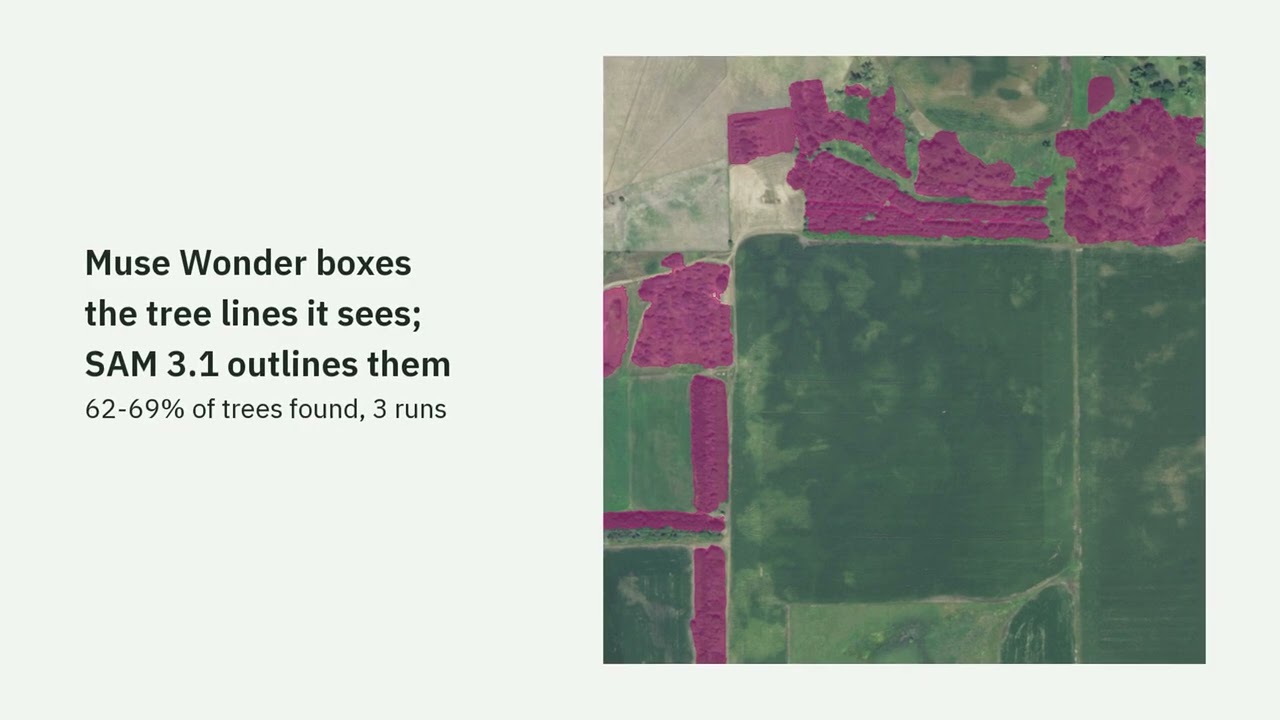
On a 24.1-acre Montana block, ClearSwath marks 9.7 acres to spray: only where a drone weed map found leafy spurge and no label rule holds the spot back. I grew up on a South Dakota farm, where every spray job starts with a pesticide label: dozens of pages of setbacks, wind limits and rates that no sprayer reads for you. Give it a field, the label PDF and a weed map. Muse Spark reads the label into rules, each carrying its exact sentence; code checks that sentence is on the page and drops any rule whose quote isn't (the plan lists it as not applied). Click any held-back spot on the map and it quotes the sentence and page behind it. Muse Wonder boxes tree lines on the aerial photo for SAM 3.1 to outline (17% of trees found by SAM alone, 62-69% with Wonder, 20 test tiles, three runs). A model trained on Meta's DINOv2 features, on Modal, maps the weeds (90% of held-out spurge plots found, 10% of clean plots flagged). Out come a 1 m spot-spray map and DJI/GeoJSON/KML files that won't build below the label's minimum spray volume. After the job, a spoken note goes through Muse Voice Transcribe and Muse Spark fills the application record, marking anything unsaid as missing; in the video it's my own voice reading a made-up sample job. Live runs read labels with the open-weights Muse Spark Open on Baseten. The decision (No conflicts in checked rules, Adjust, Do not spray) always comes from tested geometry code, never a model, and the applicator still decides. The demos are saved real runs, recomputed in code when you change anything; the DJI file is a planning file, not flight-tested. Everything was built during the event; third-party parts are listed in the README. Live demo: https://clearswath.onrender.com