Hypatia
Built at Meta Global AI Developer Hackathon · Oct 26, 2026 · Remote
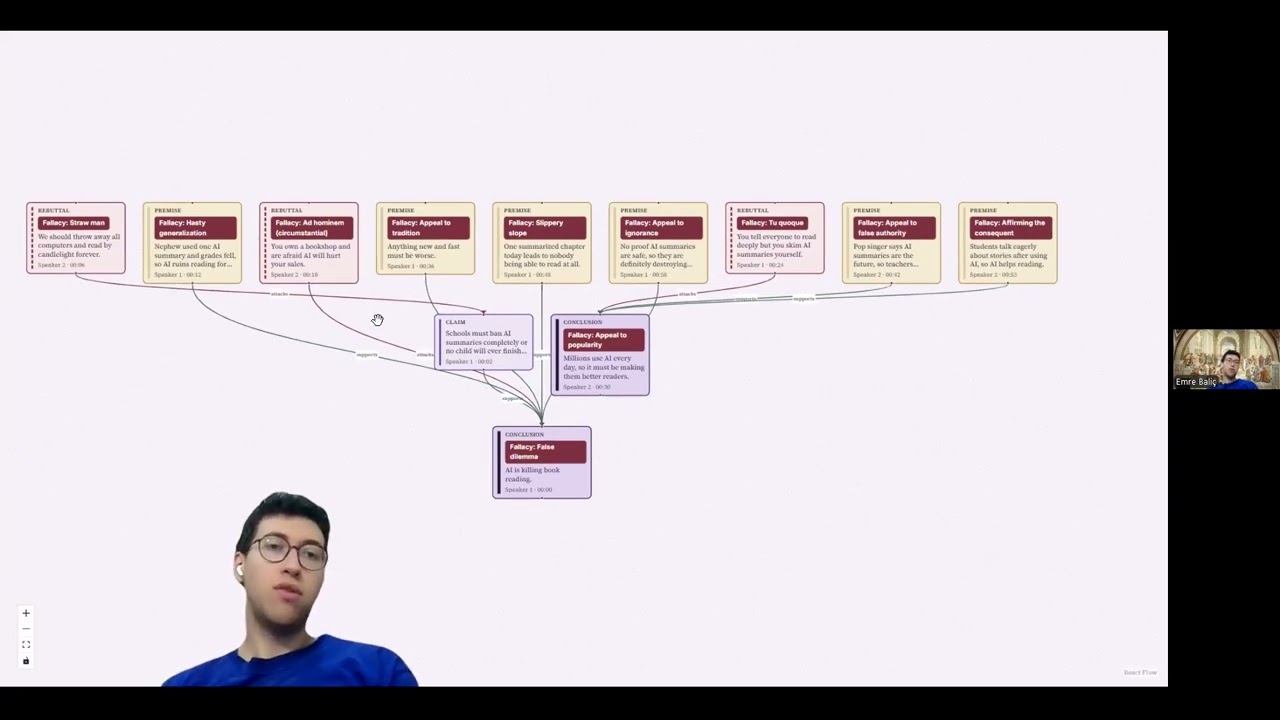
Hypatia turns spoken reasoning into something you can inspect. Upload a debate, meeting recording or podcast (or paste a transcript) and Hypatia transcribes it with speaker diarization, maps every argument as premises to conclusions on a clickable graph, flags logical fallacies with the exact quote and timestamp, and verifies its own claims. Then you can ask a philosopher - Aristotle, Socrates, Hypatia, Kant, Marcus Aurelius or Epicurus - to judge the exchange, each with their own method. The problem: many decisions in meetings, classrooms, panels and podcasts rest on spoken arguments that nobody replays and dissects. Weak premises, straw men and unsupported leaps slip by because speech is fast and transcripts are walls of text. Hypatia finds where the argument breaks before the decision does. How it works: - Multi-agent pipeline: Analyst (drafts argument nodes and support/attack edges) -> deterministic verifier (every quote must appear in the transcript, every timestamp must fall inside its segment) -> Fallacy Hunter -> semantic verifier (asks the model whether each quote actually supports its label; it can only downgrade, never upgrade). - Honest by design: unverified items are not hidden. They are shown greyed as "uncertain", so the system shows its own failures. - Grounded judges: every philosopher reply must cite real argument-map node IDs or it is rejected. Click a cited node and the map highlights it and the player seeks to that second. - UI: media player, React Flow argument map with fallacy badges, philosopher panel, and a zero-cost demo mode. - Engineering: FastAPI + React/TypeScript, JSON-schema structured outputs validated with Pydantic, all model calls behind one client module, and offline tests for every module with a mocked model. Everything was built during the hackathon with an autonomous coding-agent loop (task specs, a quality-gate script and a spend cap).