FARMRELAY
Built at Meta Global AI Developer Hackathon · Oct 26, 2026 · Remote
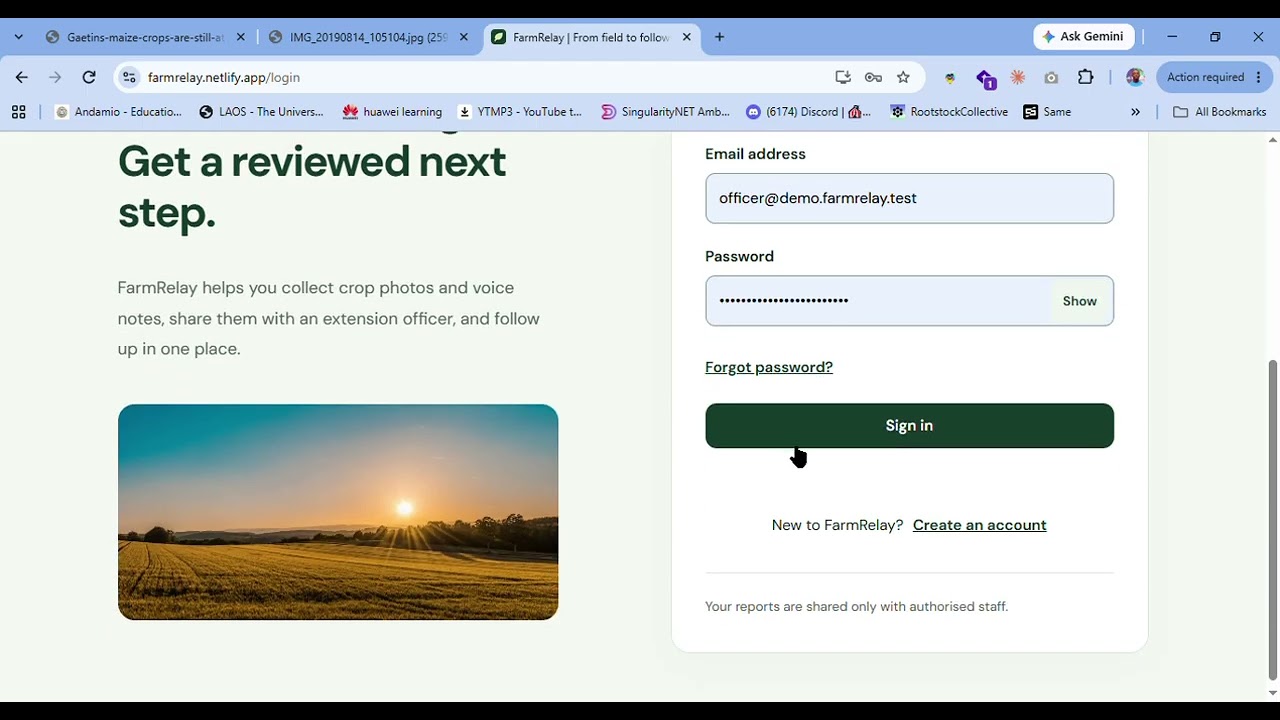
FarmRelay is an AI-assisted crop investigation and extension support platform that helps farmers turn photographs, voice notes and field observations into clear cases for agricultural officers to review. THE PROBLEM In northern Ghana, many smallholder households rely on seasonal farming for food and income. When crops show damage, uncertainty and limited access to timely advice can lead to unsuitable treatment, wasted money and worsening losses. Extension officers need more than an isolated photograph. Missing crop history, inconsistent affected-plant counts and incomplete follow-up information can create repeated questions and delay useful advice. Slow connectivity and difficulty completing text-heavy forms can further complicate reporting. THE SOLUTION FarmRelay provides a mobile-first, browser-based workspace where farmers capture crop photographs, record observations, save drafts and submit when connected. Images are compressed to reduce upload size. Evidence, conversations, officer responses and follow-up observations stay together in one case. Meta models support three connected capabilities: 1. Muse Voice Transcribe converts English recordings into text, making spoken observations available for review and further analysis. 2. Muse Spark examines photographs, report details, answers and transcripts together. It generates structured investigation briefs, identifies conflicting information, distinguishes reported claims from visible observations, highlights uncertainty and asks targeted questions. Observations reference their supporting evidence so officers can inspect the source. 3. SAM 3.1 detects leaf regions for visual inspection. Region detection does not establish a disease diagnosis. An extension officer reviews the case, requests clarification and provides a reviewed next step. Farmers receive responses and add new evidence within the same case. Administrators manage assignments and access. WHAT MAKES IT USEFUL FarmRelay connects evidence collection, AI-assisted investigation, officer review and follow-up. In a live demonstration, Muse Spark identified conflicting affected-plant counts and recognised that a reference photograph could not confirm the reported field problem. The platform uses role-based access, private evidence storage and analysis tied to the evidence version. AI processing requires connectivity, while saved drafts support reporting preparation during interruptions. FarmRelay is designed for farmers, cooperatives and agricultural advisory teams. Its goal is to reduce incomplete reports and support clearer, more traceable agricultural advice. The prototype currently focuses AI investigation on maize. Demonstration cases and reference images are labelled, and field effectiveness remains to be evaluated.