FibreSight
Built at Meta Global AI Developer Hackathon · Oct 26, 2026 · Remote
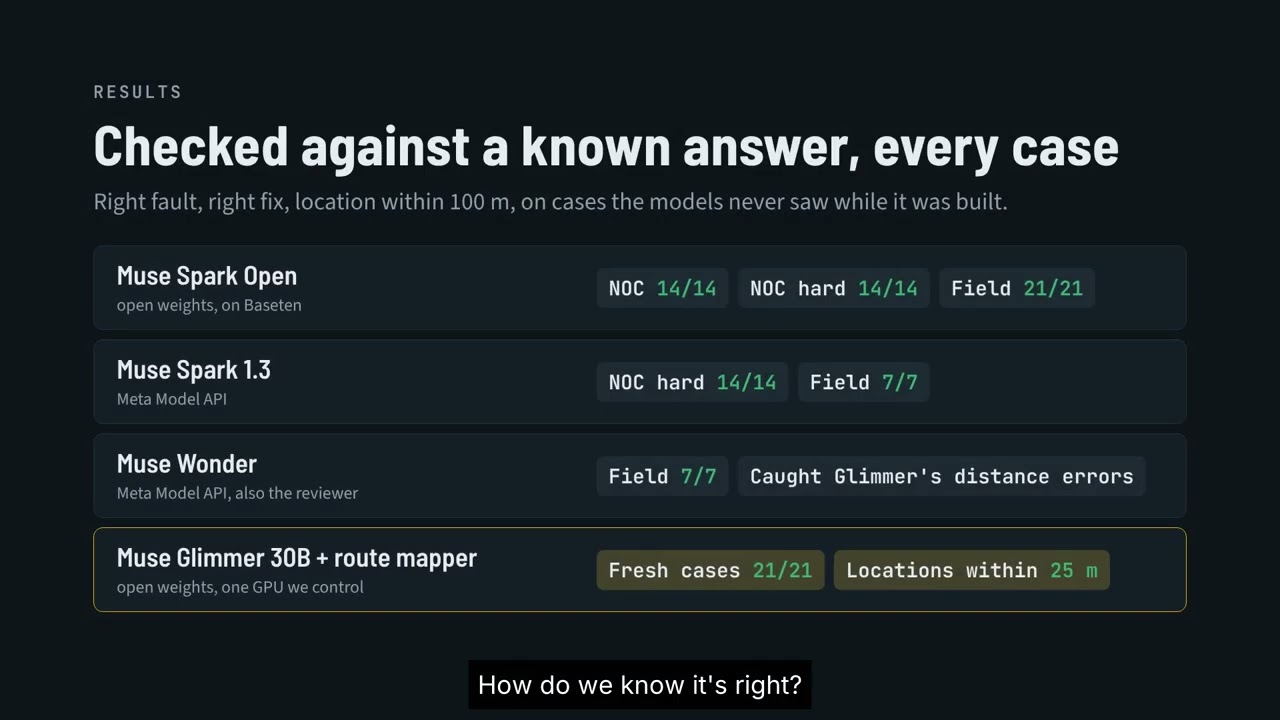
FibreSight is a verifiable AI agent that finds fibre network faults the way a senior transmission engineer does, for both people who fix them: the NOC engineer working remotely and the technician on site. In the NOC, it works only from what can be reached remotely: alarms, 14 days of performance data and the OTDR built into the line equipment. It finds the fault and its exact place on the route map with nobody on site, then writes the dispatch work order: which crew, what kit, where exactly (metres from the nearest closure) and the reading that proves the fix. In the field, the technician works with FibreSight on their phone: voice notes (Muse Voice Transcribe), connector end-face pictures (SAM 3.1) and instrument readings. It guides one step at a time and can only close the ticket when a live reading after the repair is back in range. Every step is verified, following Meta's verifiable-agent practices: a mandatory check inside submit (complete answer, real location, the right fix, every quoted reading matched to the instrument output, checklist closed; three tries, then a human), Muse Wonder as a second-engineer reviewer, NOC sign-off before dispatch, and proof by measurement in the field. To prove it works I built a physics simulator of fibre links with seven fault types and the traps that catch real engineers (OTDR fibre distance versus route distance, splices between fibre types that look like gains, ghost reflections, lasers that fail slowly, misleading field notes) and a strict verifier with a known answer for every case. On held-out cases, Muse Spark Open and Muse Spark 1.3 sent the right crew to the right place 14 of 14 times as NOC engineers. Muse Glimmer 30B, on one GPU we control, scored 21 of 21 on fresh cases with the route mapper. Everything was built during the hackathon. Bonus prizes entered: Best Build on Meta Open Weights, Best Agentic Use-Case and Most Viral Project.