MetaThink
Built at Meta Global AI Developer Hackathon · Oct 26, 2026 · Remote
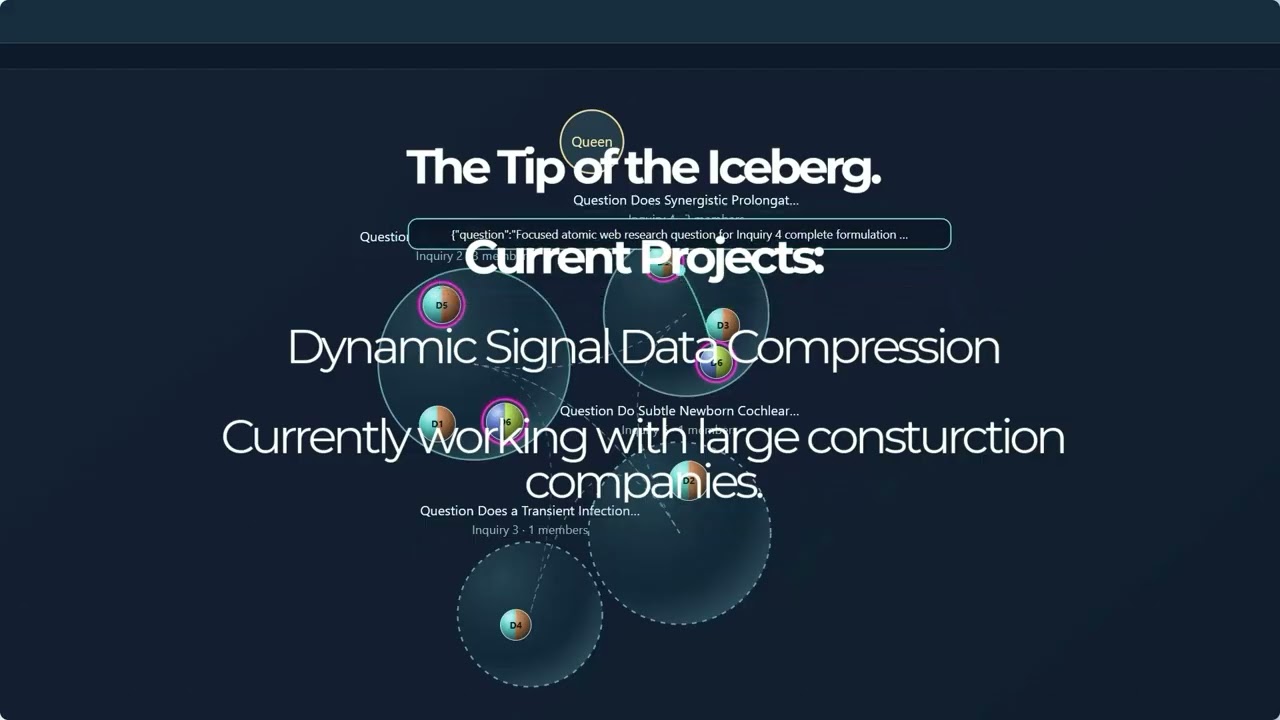
MetaThink turns Meta's Muse Spark Open into a persistent, self-organizing research hive for scientific and engineering problems. As a parent of three, I chose sudden infant death syndrome (SIDS) as its first challenge. I remember the fear of a baby not waking up, and wanted to turn that fear into research questions worth testing. The working system produced three research directions: 1. A gut-to-brain hypothesis linking digestive peptides and arousal, with a proposed biomarker study using historical biobank samples. 2. A wearable sensory-rescue concept to investigate whether stimulation could support an infant's arousal response. 3. An early-warning concept combining sleep and heart-rate-variability signals, inspired by sensing in Apple and Samsung watches. All three require clinical validation. The immediate output is a concrete research agenda; the potential beneficiaries are families whose lives could be changed by progress on SIDS. The underlying problem extends across domains. Complex investigations require sustained inquiry, coordination, and a record of what changed. In ordinary AI workflows, people must divide tasks, carry context between conversations, connect findings, and repeatedly redirect the work. MetaThink shares that workload. A governing Queen keeps the original objective in view while drone agents pursue focused inquiries. They form evolving teams, connect related questions, request research, and spawn additional thinkers. Separate assessments of relevance and inquiry value help expose drift. Work and team history persist so people can inspect and continue an investigation. In the SIDS run, two inquiries converged on a shared proposed experimental protocol that did not require infant mortality as its endpoint. The saved record retained uncertainty and outstanding novelty checks, giving researchers both a next experiment to consider and the gaps to investigate. I built the application in native Go during the competition, with SQLite persistence and a real-time dashboard. The demo shows actual inquiries, agent outputs, assessments, and changing team connections. Historical replay lets judges follow the investigation and inspect the work behind a proposal. The initial users are researchers, engineers, and domain experts who need a continuing workspace for complex analysis. A small team could explore several approaches in parallel, preserve its work between sessions, and decide what to test next. I have also tested dynamic information-compression design and am working with a construction-company partner to tune contract analysis, material-level estimating, and subcontractor scopes. That provides a practical path to regular professional use, with human experts deciding which outputs deserve action. MetaThink fits Push the Frontier: it applies Meta AI to the process of investigation itself, helping people develop, connect, and test ideas on problems that matter.