Verityn
Built at Meta Global AI Developer Hackathon · Oct 26, 2026 · Remote
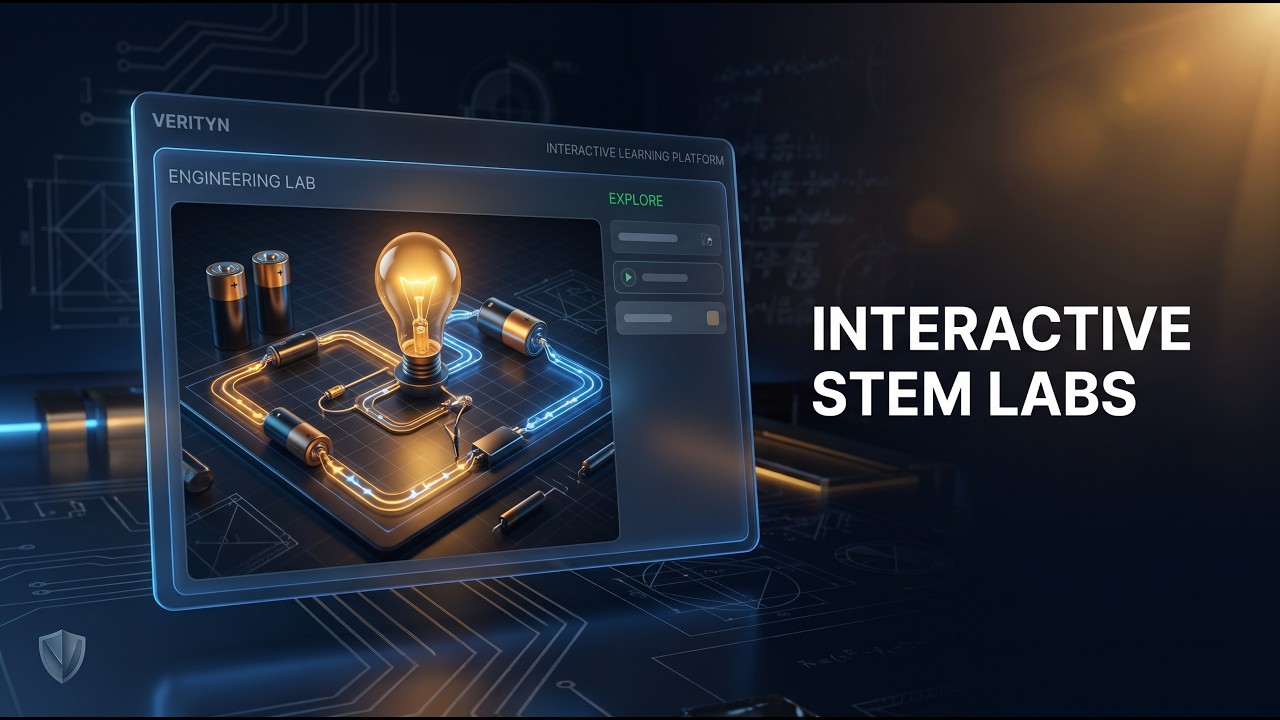
Verityn is an evidence-first STEM laboratory built around one idea: answers are everywhere, understanding is not. I'm a second-year CS student who realised I had been reading AI answers instead of learning, so I built a lab where thinking comes first. Five beliefs shape every screen: thinking stays human, so learners predict before the AI speaks; practice should not need a lab bench, so they build, reset, and retry safely in the browser; diagrams should not stay static, so sketches become testable models; a wrong answer should teach something, so predictions are compared against measurements; and curiosity needs room to play, so the Experiment Bay brings back messing about on purpose. Built for students who can't count on a lab bench or second chances, especially in Africa, where I study: everything runs in the browser, and every experiment can be reset and retried safely. In the Guided Lab, learners predict (Yes / No / Not sure) before anything is tested. A deterministic modified-nodal-analysis solver in Python measures the circuit, so the result is physics, not a guess. A Muse Spark coach then climbs a bounded help ladder: a question, a pointer, and a demonstration only with the learner's consent (with Undo). In Solo, the server refuses every coach call, so the learner must apply the idea alone. The Experiment Bay is the playground: wire anything, stack batteries, push the voltage with a stress rig until bulbs overwork and explode, then ask Muse Spark why, from the measurements. Reality Lens turns a photo, sketch or diagram into a reviewable circuit model: Muse Spark proposes the parts, the learner confirms, and the solver tests it. Spoken answers are transcribed by Muse Voice Transcribe. Meta models propose; code decides. Model outputs are schema-checked, checked for leaking the answer, and checked against the solver's numbers, with a clearly labelled deterministic fallback. Circuit region detections shown are precomputed samples (Segment Anything Model 3.1, sample-only); no live SAM calls are made. Circuits are the first live module of four planned STEM disciplines. Under the hood: a deterministic MNA solver; an evaluator returning CONSISTENT, CONTRADICTED or UNASSESSABLE; a Flask API with typed errors; mocked-HTTP backend and frontend suites with lint and build gates; and an end-to-end browser smoke test. Verityn is a working prototype with no user data yet; classroom pilots are the planned next step. Built solo for the Meta Global AI Developer Hackathon (Indie track, Build for Your World).