TraceGaze + Muse
Built at Meta Global AI Developer Hackathon · Oct 26, 2026 · Remote
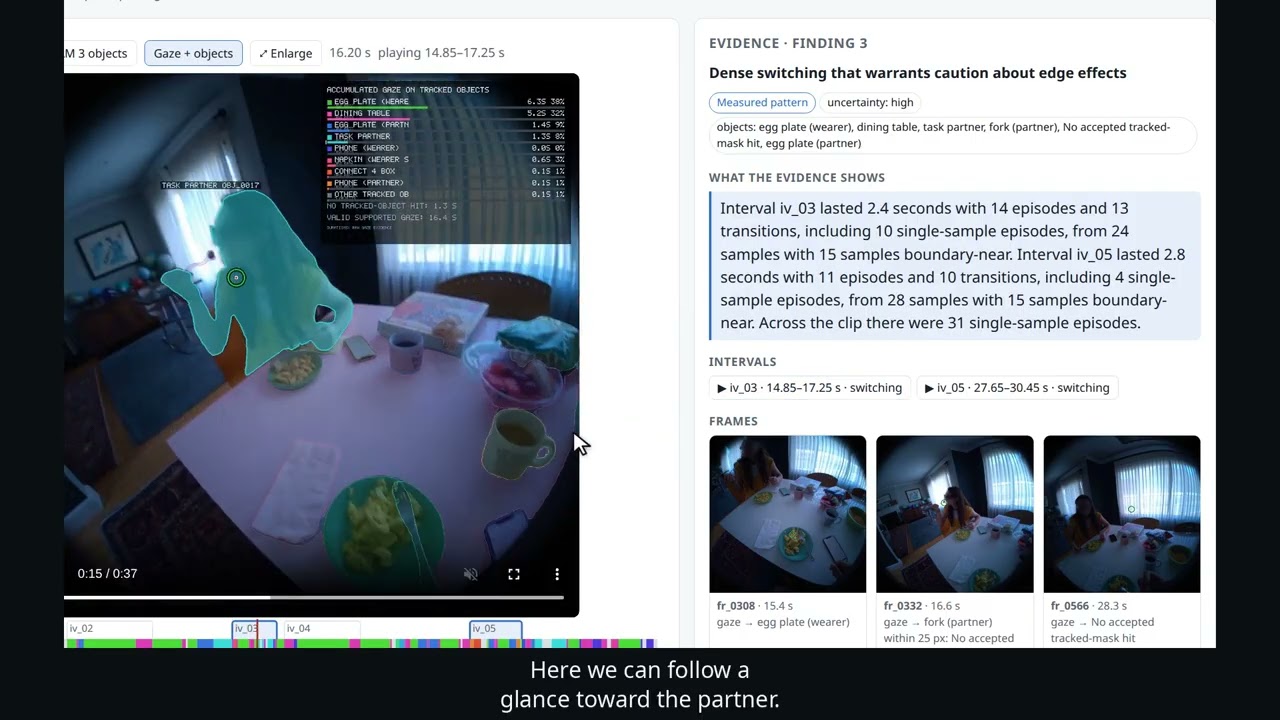
What if getting help from AI began before you had to find the words? TraceGaze + Muse builds toward AI glasses that help older adults keep doing everyday things for themselves. Useful assistance starts with understanding the person's situation: what is in front of them, where they are looking, and how an activity unfolds. We turn first-person video and eye tracking into context that AI can interpret. SAM 3 tracks selected objects through the recording. TraceGaze links gaze samples to object masks and computes episodes, revisits, transitions and time spent looking at each object. Muse Spark interprets these measurements alongside key frames, producing a scene summary and findings linked to specific moments. Clicking a finding opens its video interval, supporting frames and checked measurements. Our demo follows a shared meal from raw first-person footage through object tracking and gaze timelines to a real Muse-generated analysis. It shows the complete interaction: select an object, explore its gaze episodes, read a finding and return directly to the moment behind it. This makes everyday activity explorable from the wearer's perspective and provides a practical way to develop context-aware assistance. During the hackathon, we built the evidence packaging, Muse Spark integration through Meta Model API, automatic reference and number checks, and the interactive analysis dashboard on top of our existing TraceGaze pipeline. The public repository distinguishes this new work from the foundation. Today, the prototype interprets recorded Aria activity. Our next step is to develop proactive assistance with older adults using Aria Gen 2, then adapt those experiences to the capabilities of consumer AI glasses. Our ambition is support that fits into daily life, including moments when asking for help is hard.
