Cinemind
Built at Meta Global AI Developer Hackathon · Oct 26, 2026 · Remote
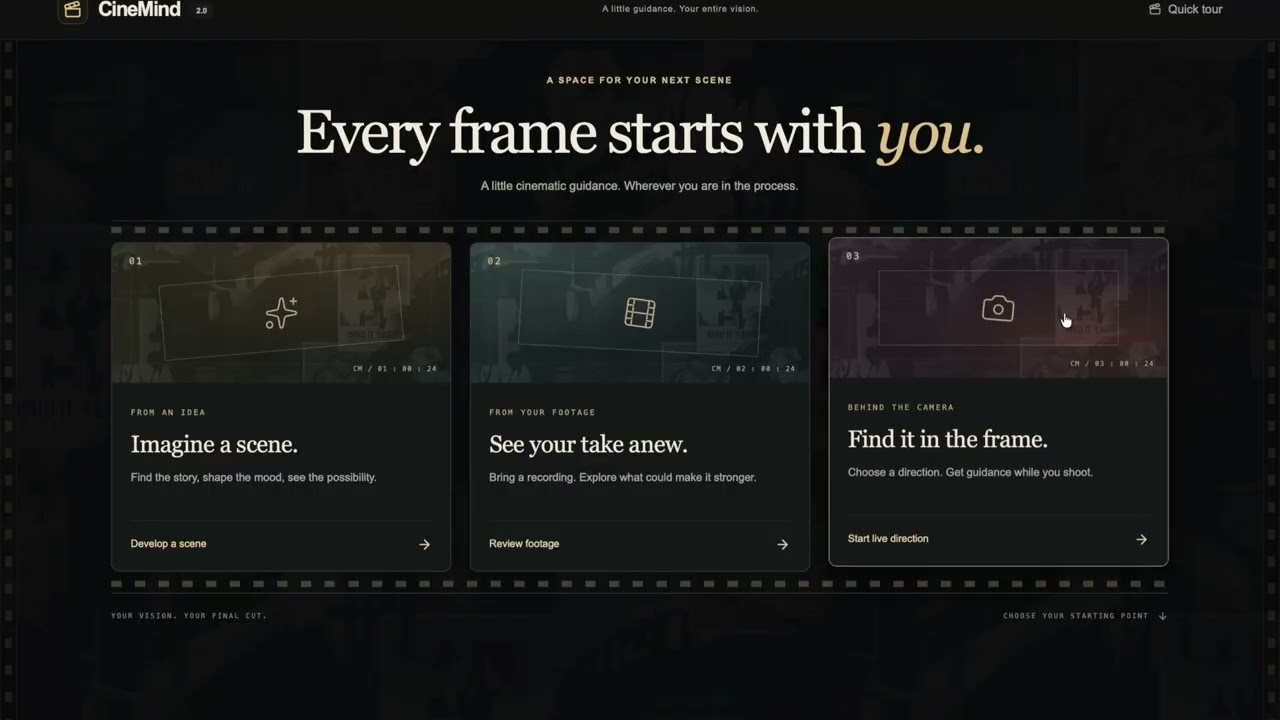
Every filmmaker starts with a feeling they want an audience to experience. Turning that feeling into a shot—deciding where to place the camera, what to include, how to use light, and what to leave unsaid—is often the harder part. Independent creators may have a compelling story and a phone camera, but limited access to experienced collaborators who can help them explore those decisions. CineMind 2.0 is a filmmaking copilot built to bridge that gap. Its motivation is simple: make filmmaking knowledge more accessible while keeping creative ownership with the person behind the camera. Creators can begin wherever they are in the process: • Develop a scene: Start with a rough idea, describe the intended feeling and practical constraints, and shape an editable scene with creative possibilities to consider. • Review footage: Bring an existing recording and explore how its framing, lighting, background, and visual choices support the scene’s purpose. Receive specific suggestions, explanations, and tradeoffs, with a clear distinction between editing possibilities and changes requiring a reshoot. • Get live direction: Connect a camera, choose an intended shot, and receive periodic visual guidance while adjusting the setup. CineMind also helps creators explore color palettes, reference-inspired techniques, subject composition, and visual previews of potential shots. These tools turn abstract advice into possibilities that filmmakers can inspect, question, and reshape. A tennis practice clip, for example, could become an energetic training reel or a quiet scene about isolation and persistence. CineMind starts by asking what the filmmaker wants it to mean, then connects its guidance to that intention. The project grew from my interest in the relationship between technology and creative expression. CineMind 2.0 extends an earlier prototype into a more interactive creative companion—one that explains why a choice might work, acknowledges what it gives up, and leaves the final decision to the filmmaker. The goal is to help more people bring their own stories into the frame, with greater understanding and confidence.