Glenox Team
Built at Meta Global AI Developer Hackathon · Oct 26, 2026 · Remote
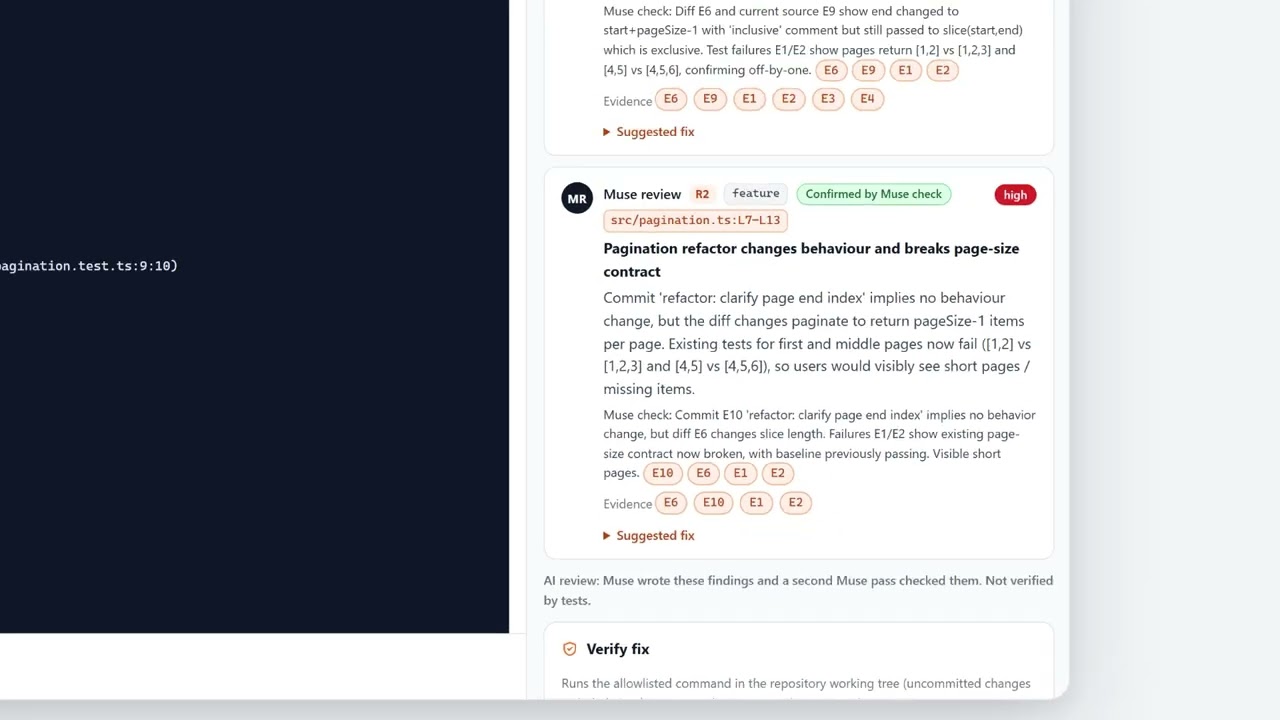
RegressionMap — Evidence-driven regression investigation A test passed last week and fails today. Finding out why means rerunning tests, reading stack traces, diffs, and commit logs, and guessing which change did it. RegressionMap runs that investigation and shows the evidence behind every answer. How it works: 1. Pick a repository, the last commit that passed, and an allowlisted test command. 2. RegressionMap runs the tests at that baseline and at HEAD, each in its own temporary git worktree, and records the real exit codes and output. 3. It collects evidence with stable IDs (E1, E2, ...): failing assertions, stack frames, diff hunks, the current source, and the commit messages. 4. Meta's Muse model (muse-spark-1.3) ranks the likely root causes as strict JSON. Every claim must cite evidence IDs, and the server rejects a hypothesis that cites none or an unknown one. 5. Muse then reviews the change through three lenses (code, feature, security), and a second Muse pass tries to refute each finding. 6. You apply a fix and approve a verification run. The test runner's exit code decides PASS or FAIL, never the model. On the demo repository, Muse ranks the real off-by-one first and the unrelated changes low, with counter-evidence. The feature lens catches a commit called "refactor" that changes behaviour, and the second pass confirms both findings. Results show in the web app, a GitHub Actions job summary, a signed JSON webhook, or a Slack message. Safety: no shell (argument arrays only), commands picked by ID from an allowlist, likely secrets redacted before the evidence reaches Muse, the API key kept on the server, and AI output always labelled as not verified and never executed. Built during the hackathon with a Go server and a React app. This version supports Node's built-in test runner (node --test).