Modus
Built at Meta Global AI Developer Hackathon · Oct 26, 2026 · Remote
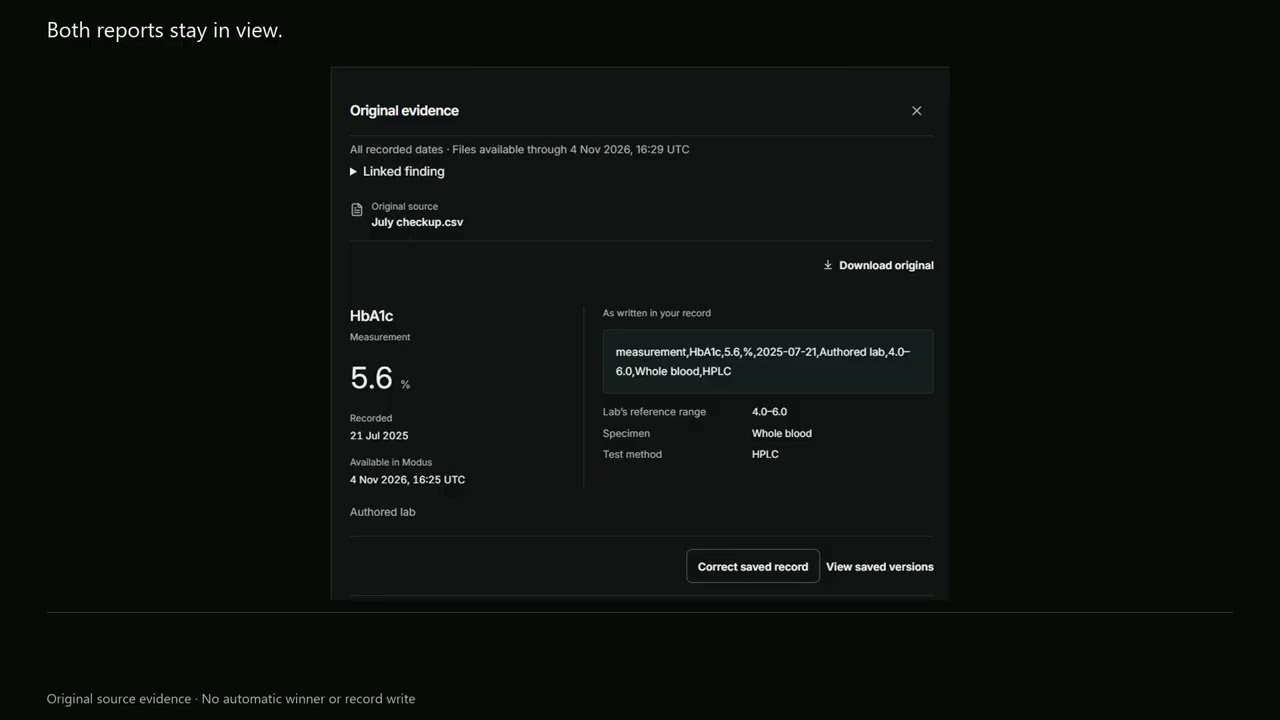
Modus puts your medical history to work. It turns the records you already own into a connected history you can search, compare and verify against the original evidence. Years of checkups, prescriptions and visits arrive as disconnected files. A simple question can mean searching through folders and reconstructing the context of an old result. When records disagree, you need to know what changed: the value, its units, the test method or the record itself. Modus gives that work a lasting result: a personal history you can keep using as new information arrives. Start with PDFs, photos, text or CSV files. Meta Muse Spark reads reports into proposed records, checks the fields and separately reads the source to look for possible missing rows. You inspect the original, correct the draft and decide what gets saved. Home places you at the center of a file orbit, with reports opening directly into their readings and sources. Search across recorded measurements, visits, prescriptions, vaccinations, procedures, diagnoses and imaging-report text. Ask a question the way you remember it: "When did I last have a blood pressure of 100?" In the working application, Modus clarifies which number you mean, retrieves the recorded 100/70 reading from 4 May 2016 and opens the original. A vague memory becomes a specific result you can check. Comparisons preserve the context behind the numbers. Two reports may show the same value while naming different test methods. Modus exposes both sources, makes the disagreement visible and withholds a numerical comparison when the recorded context does not support one. Units, dates, reference ranges, specimen and methods stay attached to the result. That history remains accountable as it changes. Correct an entry and Modus preserves the original and earlier version, then flags affected explanations for refresh. It also distinguishes when something happened from when its record became available. A report dated 2019 but received in 2026 can enrich today's history while remaining outside what was known in 2025. For your next appointment, choose the records to include, review a dated summary with source references and download it. If a selected record is disputed, the summary includes the conflicting records and their sources. You leave with the relevant history prepared and the disagreements visible, ready for a conversation about your health. Originals and revision history are encrypted locally, with a key held by the operating system. The working prototype has a public MIT-licensed repository, passing Windows and Ubuntu CI, and real Muse-powered report reading and investigation. Demonstrations use authored records and focus on record retrieval and integrity, without clinical interpretation or treatment advice. Your history, ready when you need it. The evidence, right beside it.