Intel-terminal
Built at Meta Global AI Developer Hackathon · Oct 26, 2026 · Remote
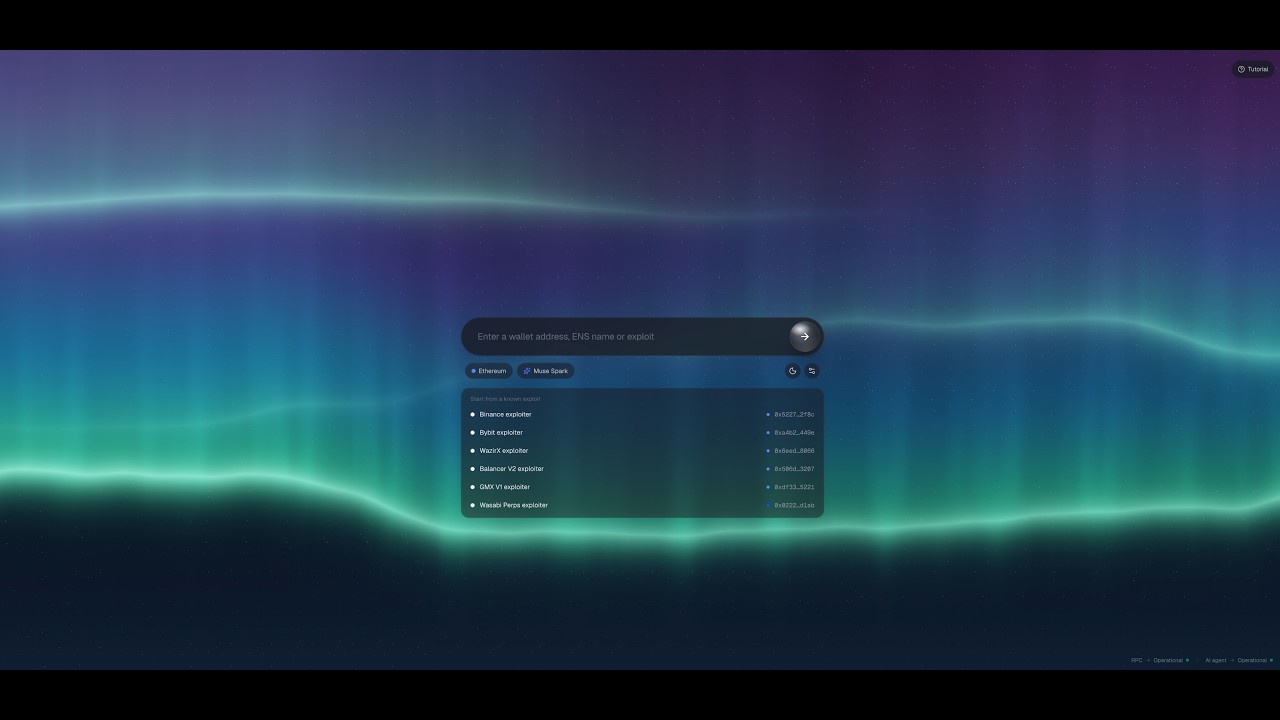
Intel Terminal is an on-chain security investigation workspace. It turns a stolen-funds trail into a cited, readable post-mortem. The problem. When an exploit happens, the facts are scattered: the attacker’s wallets, the protocols the money was laundered through, the bridges it left by, the labels and write-ups that explain it. Explorers show one address at a time. Forensic platforms are expensive and closed. AI chat tools speculate and invent figures. Investigators end up stitching evidence together by hand, under time pressure, and the reports they write are hard to verify. What it does. Trace: start from an address, an ENS name or a known exploit, and Intel Terminal builds a live trace globe of where the money went. It reads each wallet’s first 5,000 transfers, sets aside address-poisoning dust and spoof tokens, ranks counterparties by value moved, names the protocols involved (DEX routers, aggregators, bridges, mixers) and shows current balances. Investigate: an AI agent researches alongside you, using on-chain lookups, a curated dataset of 272 EVM exploits, sanctions lists, web sources and PDFs. Every sentence it writes must cite a source, and a verifier removes any claim, figure or address the evidence doesn’t support. Report: one click generates a plain-language post-mortem with a timeline, mechanism, fund flow, actors, impact, assumptions and numbered sources. You get a private page and a shareable PDF. Facts the agent verifies are kept in a curated memory, so each investigation makes the next one faster. When you mark a sentence wrong, the facts learned from it are retracted. Why it matters. It makes an exploit investigation fast and checkable. Instead of a dashboard of numbers, you get an evidence-backed account of what happened and where the money is now. For example, the $6.36B Binance hot-wallet theft is traced from the drained wallet through Uniswap to the attacker’s holdings, with every figure cited.