NacermeIV
Built at Meta Global AI Developer Hackathon · Oct 26, 2026 · Remote
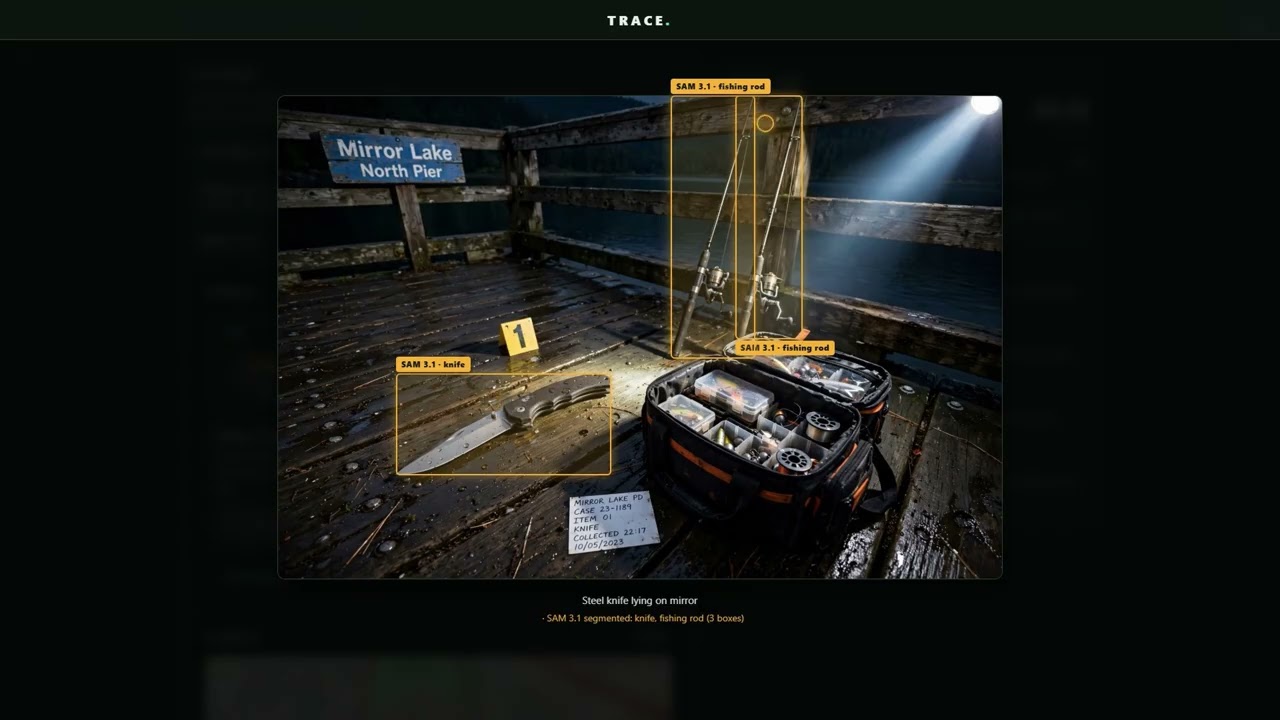
TRACE. — So past cases are never forgotten. Major-crime investigators handle hundreds of cases at once, yet the clue that could unlock today's investigation often sits inside a file closed 5–20 years ago — in nobody's memory. Traditional search only matches shared words in summary text, so two cases describing the same event in different words never find each other. The strongest clues — an object in a photo, a sentence in an interview recording, the distance between two crime scenes — are never searched at all. TRACE is an AI-powered investigation assistant that matches every clue in a new case against similar cases in the archive: the summary, crime type and method, people, locations and distances, interview transcripts, objects detected in evidence photos, and event timing. It then presents each similarity item by item — with a 1–10 strength score and the exact evidence behind it. No quote can appear in a result unless it is verified verbatim in the source file, so fabricated evidence is structurally impossible. TRACE never makes decisions, never declares suspects, and never proposes verdicts. It surfaces candidates and shows its reasoning; the final confirmation always belongs to the investigator. Four Meta models each do the job they are best at: Muse Voice Transcribe turns interview audio into speaker-separated transcripts, SAM 3.1 labels objects in evidence photos, Muse Spark 1.3 compiles each case into a structured dossier, and Muse Wonder 1.0 judges similarity across candidate cases. TRACE also works offline — records are queued and sent automatically when the connection returns. All demo data is entirely fictional. TRACE was designed and built solo for the Meta Global AI Developer Hackathon.