Floodline
Built at Meta Global AI Developer Hackathon · Oct 26, 2026 · Remote
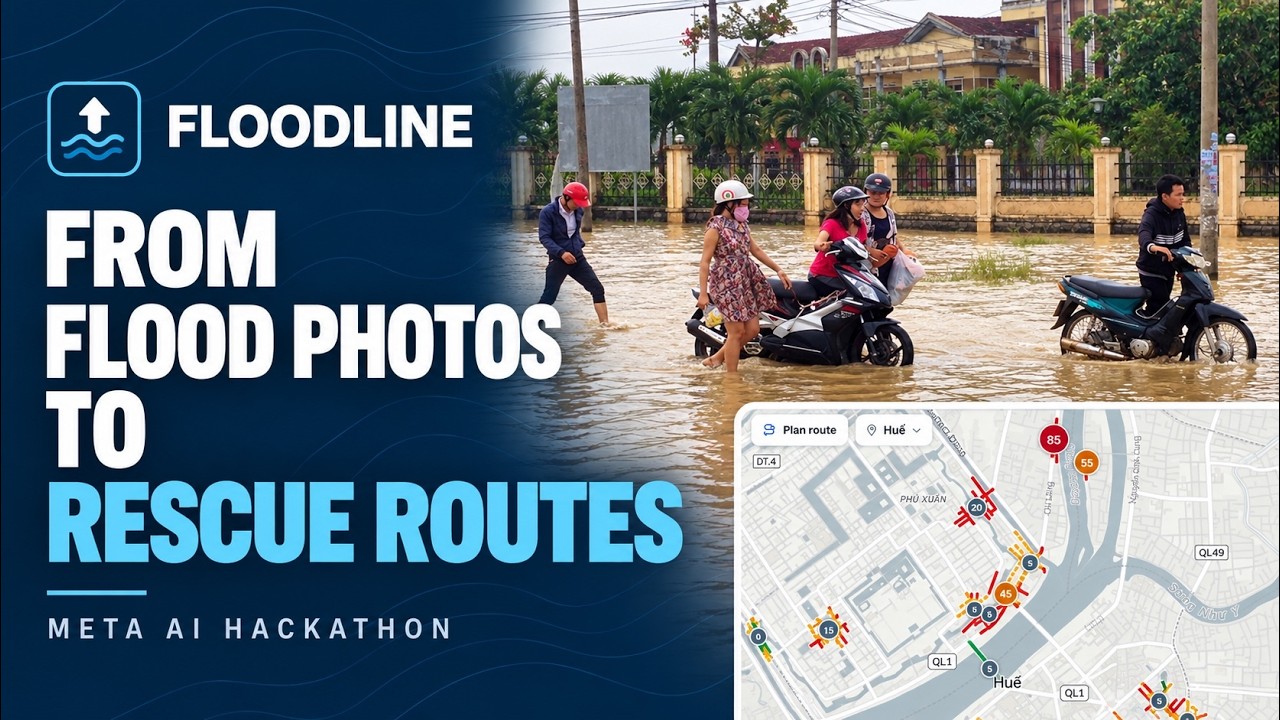
Floodline helps rescue coordinators answer a practical question during a flood: which vehicle can reach the people asking for help? Residents send the photos, short videos and voice notes they already share through a Telegram bot or a web page. Floodline measures the water against visible reference objects, exposes the evidence and uncertainty, and turns reports into street-level passability for scooters, cars and rescue trucks. Coordinators can route around reported impassable streets, prioritise rescue requests and read residents' original messages alongside English translations and dispatch drafts. They can also ask questions in plain language; Muse Spark checks the reports, streets and routes with tools. The demo shows a complete decision: a truck leaving Huế's Central Hospital detours around four impassable street segments; another destination has no available road route and calls for a boat. A second scenario in Valencia demonstrates the same workflow with Spanish reports. On 292 human-labelled FloodDET photos, the calibrated pipeline achieved 0.199 m depth MAE versus 0.220 m for calibrated Muse Spark alone, with 95% interval coverage under five-fold cross-validation. Uncertain cases are marked risky for human review. The working demo uses real flood imagery in simulated incidents. Live demo: https://floodline-193992092607.us-central1.run.app Telegram: https://t.me/floodline_flood_bot