dvsh
Built at Meta Global AI Developer Hackathon · Oct 26, 2026 · Remote
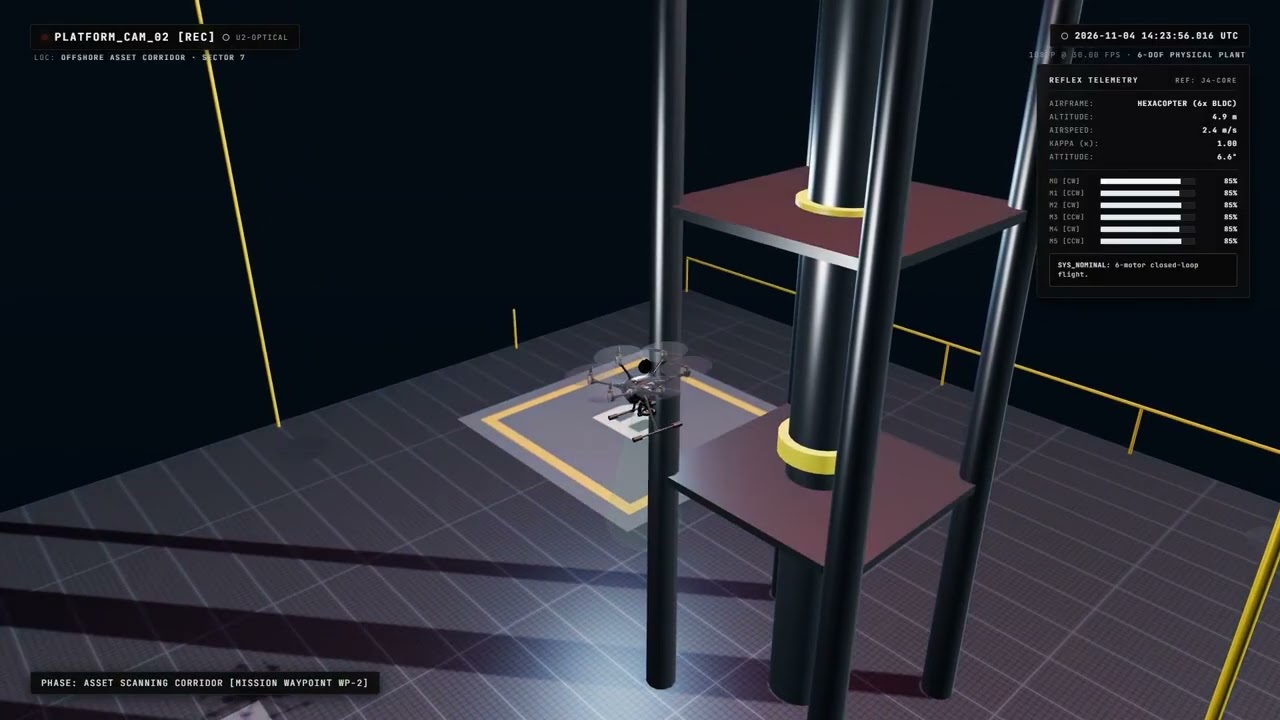
MorphoKernel integrates Meta's developer models via the Meta Model API to power "Cortex" the asynchronous semantic and perceptual reasoning subsystem that supervises the camera-rate local reflex: 1. Segment Anything Model 3.1 (SAM 3.1 / sam-3.1): - Zero-Shot Perceptual Grounding: SAM 3.1 provides asynchronous visual grounding for the robot's initial reference frame and dynamic obstacle detection (e.g., repulsive obstacles/landing rings in the workspace). - Dual-Lane Vision Pipeline: In "Gate 0" benchmarking, we proved hosted segmentation latency (2.5–3.2s) cannot track at 30 Hz. MorphoKernel uses SAM 3.1 to ground the object bounding box once, handing coordinates to a local high-rate optical flow tracker, achieving the reliability of Meta vision models alongside real-time reflex speed. 2. Muse Spark (muse-spark-1.3): - Natural Language Intent Compilation: Translates high-level mission goals (e.g., "Orbit the target and maintain 2 puck-widths clearance from obstacles") into validated, executable controller parameters (ControllerConfig JSON). - Rehearsal & Explainability: When an actuator failure occurs and the local reflex heals the body matrix, Muse Spark analyzes telemetry logs to generate plain-language diagnostic explanations of what changed and how control authority was redistributed. 3. Muse Voice Transcribe (muse-voice-transcribe-1.0): - Push-to-Talk Speech Interface: Provides hands-free operator interaction, streaming audio clips to Muse Voice Transcribe to dynamically re-task the autonomous drone in mid-flight. By isolating Meta models on a dedicated Cortex worker thread, MorphoKernel leverages Meta's frontier multimodal intelligence for high-level decision-making while ensuring physical safety and reflex control remain guaranteed at 30 Hz.