Ikigai Loop
Built at Meta Global AI Developer Hackathon · Oct 26, 2026 · Remote
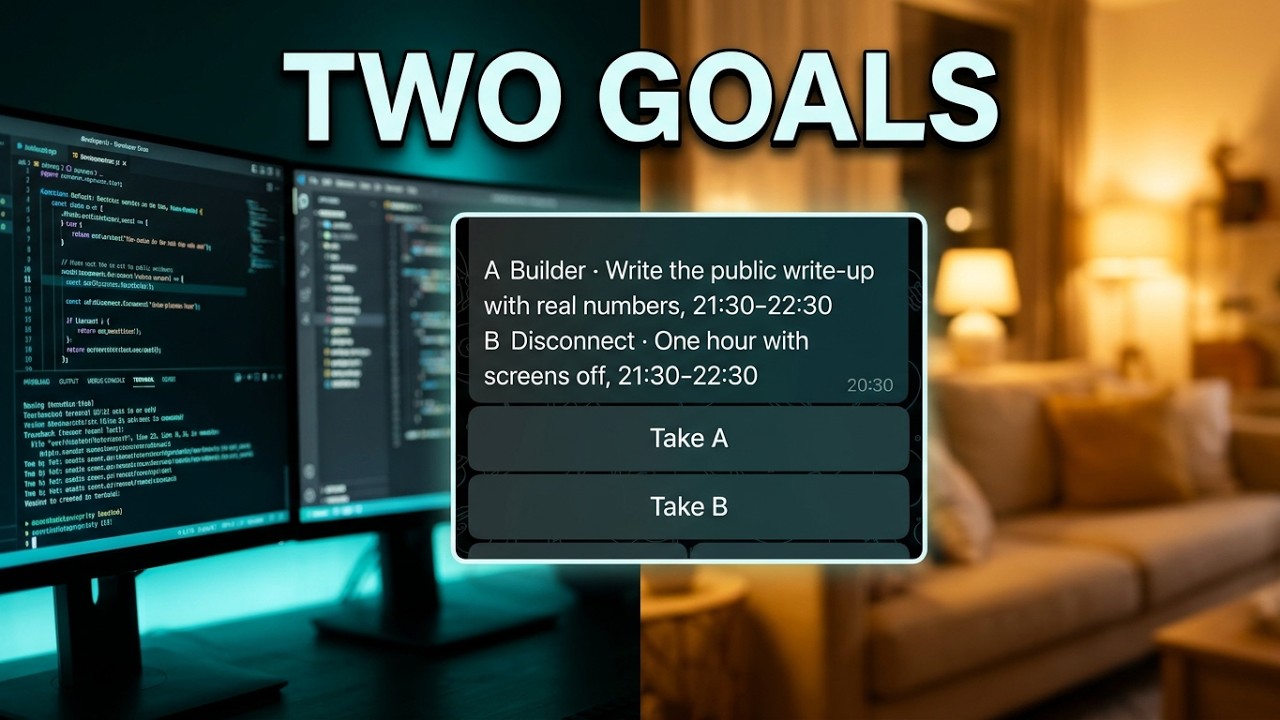
Two goals, one free hour. My work and my family compete for the same time and attention. In Japanese, ikigai is a reason for being, often drawn as the place where what you love, what you're good at, what the world needs and what you can be paid for meet. I built Ikigai Loop so my goals stop competing and I stop overthinking: one small step, one hour at a time. It's an assistant I'm running on myself. Five times a day it offers my next free hour to one of the promises I wrote down, with reasons from my own screen time, calendars and GitHub activity. I accept with a tap, or tell it by voice what changed, and a new card arrives in under half a minute. An assistant like this is only worth having if I can trust what it says about my own life. Models quote your data back to you and get numbers wrong, and you don't notice. So nothing reaches my phone until plain code, with no model involved, has checked the figures, sources and time windows it cites against my records. It still slipped. On Nov 2 a card said "Prs rose by 3 in the last period": the right number, from the wrong window, and five more sentences that day made the same mistake. A test that fails on that sentence came first, then the rule. The next morning's card said "Prs rose by 11 since the last card". Each miss I found is published in TRUST.md. As an extra, I built a public version of the check, so anyone can try the idea in a browser without setting up the system. The checker page has a game, Catch the AI, where Muse Wonder wrote six sentences and set traps in some, and a form for your own numbers: give it a card and a sentence, and it flags a sentence that says 12 deploys when the card says 7, and shows what each sentence was checked against. An engineer outside the project tried it on an example from their own work. It also runs on public data with known answers: on UCI bike-share and home-energy records it stopped 120 of 120 planted errors and passed 38 of 38 true claims. Over the three-day live run, all 13 scheduled cards went out on time; the gate stopped 1 of 25 first drafts, its retry passed, and no fallback was needed. Two results I registered went against me: only 1 of the 7 checkable promises I accepted shows a completion in my records, and my learner predicted my picks worse than two simple baselines. The full numbers, misses included, are in docs/live-run.md.