Polymath
Built at Meta Global AI Developer Hackathon · Oct 26, 2026 · Remote
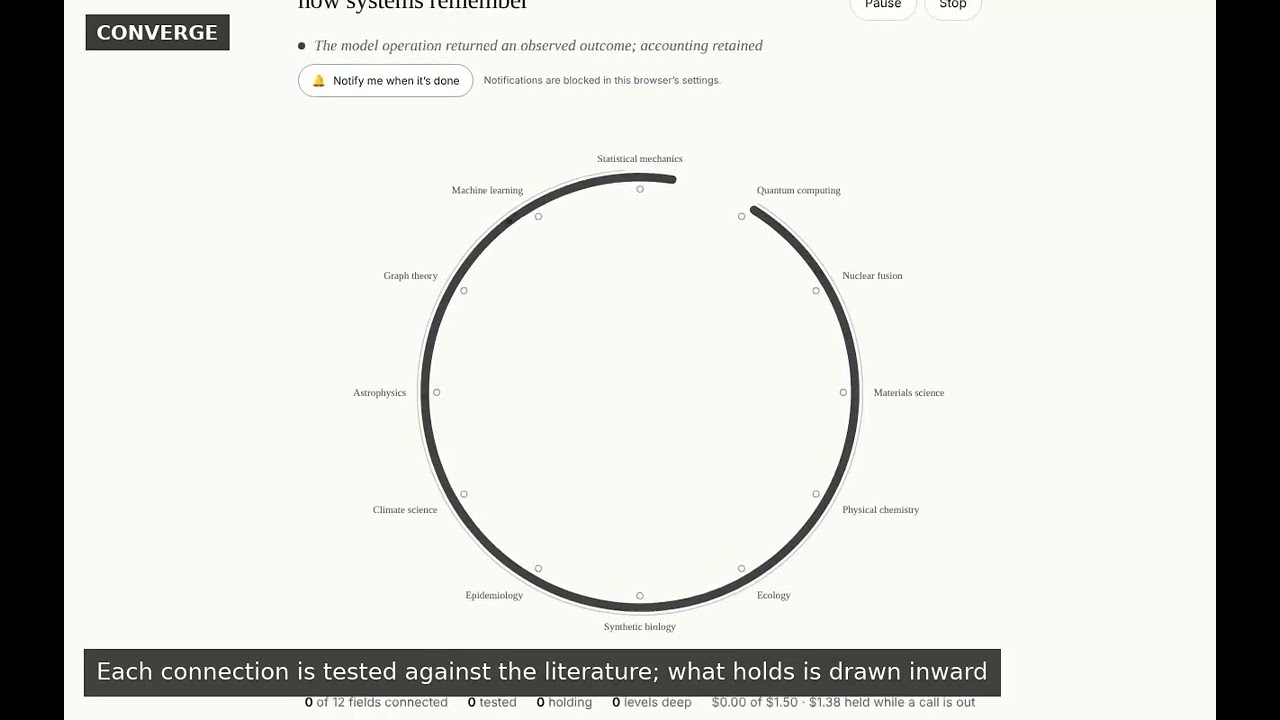
Polymath (live at https://askpolymath.com, free to try) is an AI research partner that finds discoveries hiding between fields of science. Science is split into thousands of specialties, so an answer that already exists in one field often stays unknown in the field that needs it. Polymath gives Meta's Muse Spark the whole open record of science to read, lets it decide where to look, and checks every claim against the actual papers. Five tools, all live at https://askpolymath.com and free to try: • Ask: ask any question you want and get the answer as numbered claims, each labelled Known, Postulated or Speculative and backed by the exact passage it came from, plus what remains unanswered from across fields of science. • Solve: present any problem you have and it gets answered from anywhere in science; if no single answer fits, Muse Spark borrows the closest fits from other fields and forges a new, combined solution, stating where it is still weak. • Converge: share a theme or concept you're curious about or curious about discovering something new about - the program automatically finds twelve distant and distinct fields; and retrieves what these fields might say related to your theme or concept, uplifting a new discovery or connections that weren't obvious or previously known. • Frontier: present any unsolved problem or moonshot idea that you have and it becomes a live research programme with a clear solve path towards your frontier objective, with gaps highlighted and solved where possible and steps clearly shown. • Studio: Imagine any invention you can dream of or think of, provide a quick brief and the engine creates an invention built from mechanisms that already work across fields of science, engineered with calculations, stress-tested against your requirements, and painted by Muse Image. A dossier of the invention, complete with images, references, calculations, mathematics and engineering is available to download afterwards. Truth over plausibility: a finding can only quote text Polymath actually retrieved and saved from arXiv and OpenAlex, every quotation is matched against the saved source, and an honest "not supported" is a valid result. Findings can be formalised, written up and published to Zenodo under the user's own name - Polymath automatically helps you to publish any work you do (the user can select between different levels of permission whereby Polymath can even fully draft papers and publish work on behalf of users). Everything was built during the hackathon: the first commit is 27 October 2026, and every push to main is Bitcoin-timestamped (OpenTimestamps proofs in the repo), so the whole timeline is verifiable. Built solo.