RealitySync
Built at Meta Global AI Developer Hackathon · Oct 26, 2026 · Remote
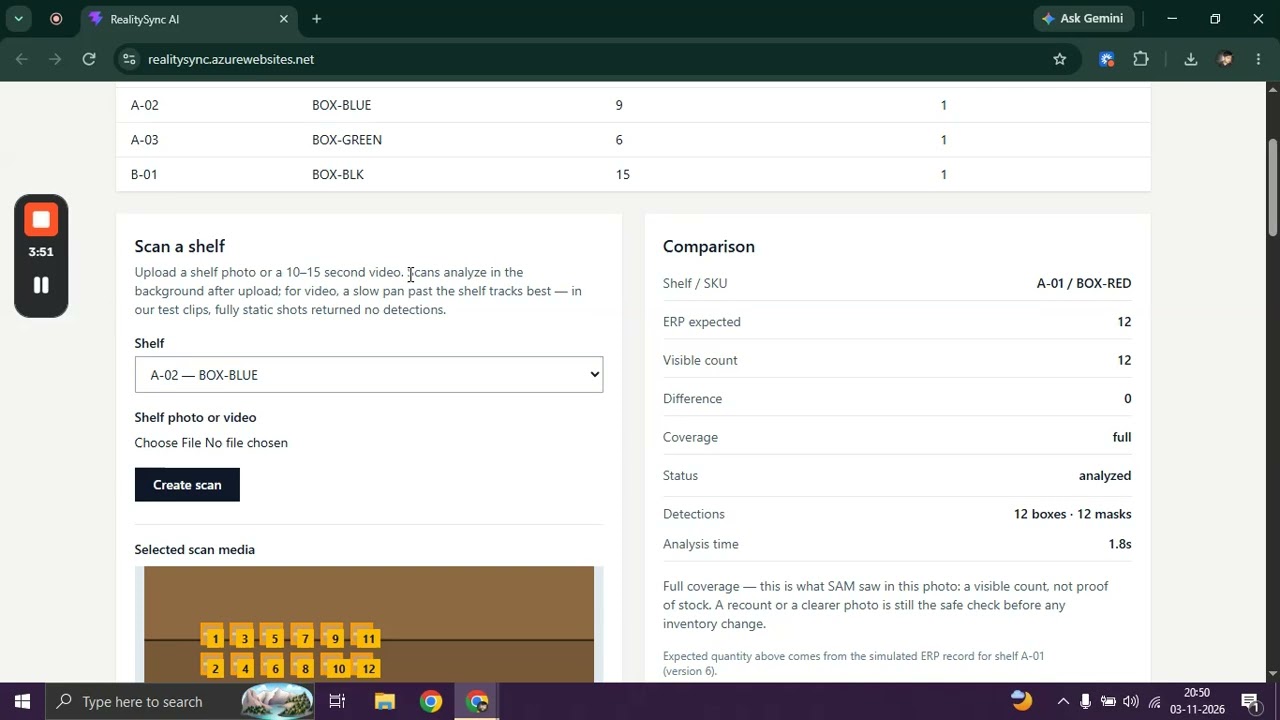
RealitySync gives warehouse ERP systems eyes. SAM 3.1 counts what is actually on a shelf, code compares it with the ERP record, and Muse Spark investigates any mismatch, but only a human can approve a correction. Warehouse ERP systems know what should be on a shelf, not what is on it, and manual reconciliation is slow and error-prone. RealitySync turns a shelf photo or short video into a human-reviewed audit. How it works: (1) A warehouse manager uploads a shelf photo or short video. (2) Meta SAM 3.1 segments the media and the app counts only the visible objects, shown with numbered outlines; the count is computed deterministically from SAM output, never by the LLM. (3) Code compares the visible count with the ERP expected quantity (demo shelf A-01 / BOX-RED: expected 12, visible 9, difference minus 3) and classifies coverage as full, partial or unknown; partial or unknown coverage yields a needs_review flag, never a confident correction. (4) Muse Spark receives only structured evidence (shelf, SKU, expected qty, visible qty, coverage, detection method) and returns a structured investigation: summary, risk, possible causes, recommended action, with safe_to_auto_update always false. (5) A human approves or rejects; approval applies the ERP correction atomically together with an immutable audit event. No LLM call can mutate inventory. Live app: https://realitysync.azurewebsites.net Tech stack: TypeScript/Node, deployed on Azure App Service with Azure Database for PostgreSQL. Measured results: on a labelled synthetic evaluation set, exact-confident accuracy was 5 of 19 evaluated scans; the system is deliberately conservative and flags uncertain counts for human review instead of guessing. The demo shelf image is synthetic and the demo video states that openly.