Investment reviews are built on revenue forecasts, but we rarely check those forecasts against what companies later report, and when we do, hindsight makes every miss look obvious, so the lessons are wrong or never reach the next review. Decision Post-Mortem fixes this with a judge that doesn’t know how the story ended: Claude re-forecasts past reviews from only what was known at the time, with names, dates and amounts masked so it can’t recall the outcome. Every miss is then sorted into what we had, what we could have got, and what nobody could have known, and only the lessons that improve forecasts on cases they’ve never seen are applied to the reviews we’re making today.
More from Intelligence at Work Hackathon
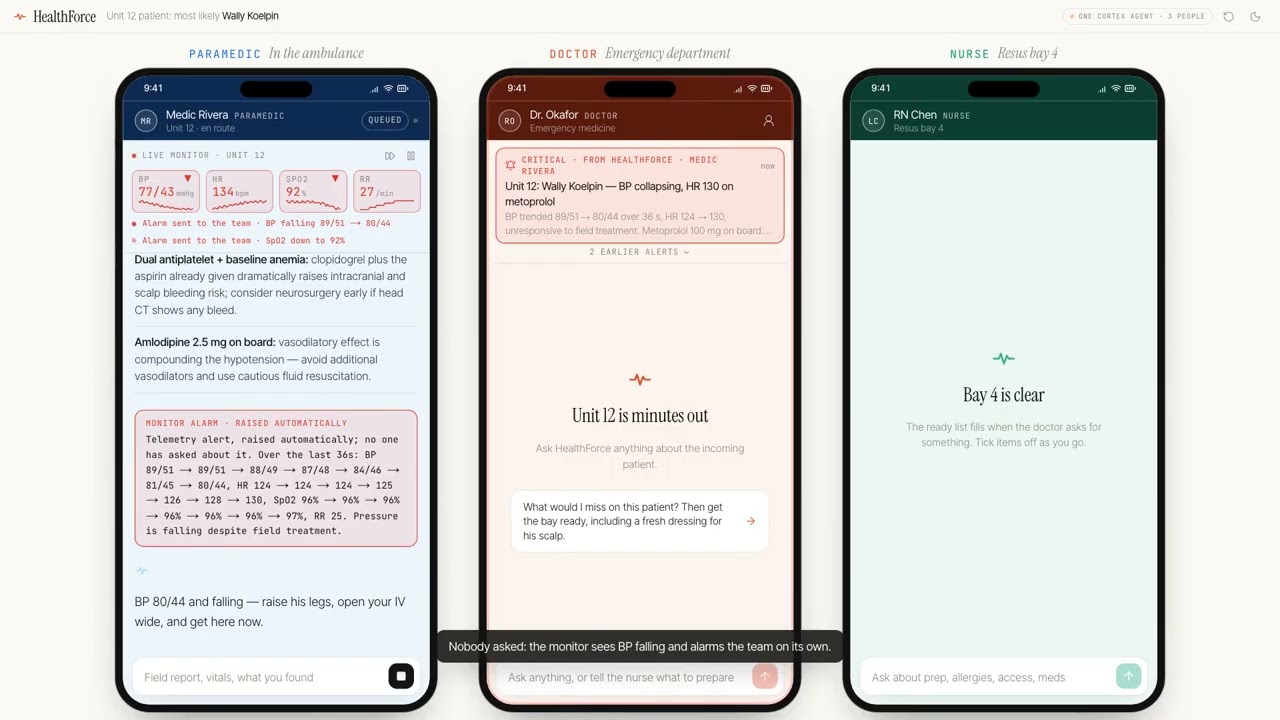
HealthForce is one Cortex Agent that serves the whole emergency team on a single patient: the paramedic in the ambulance, the ER doctor and the nurse…


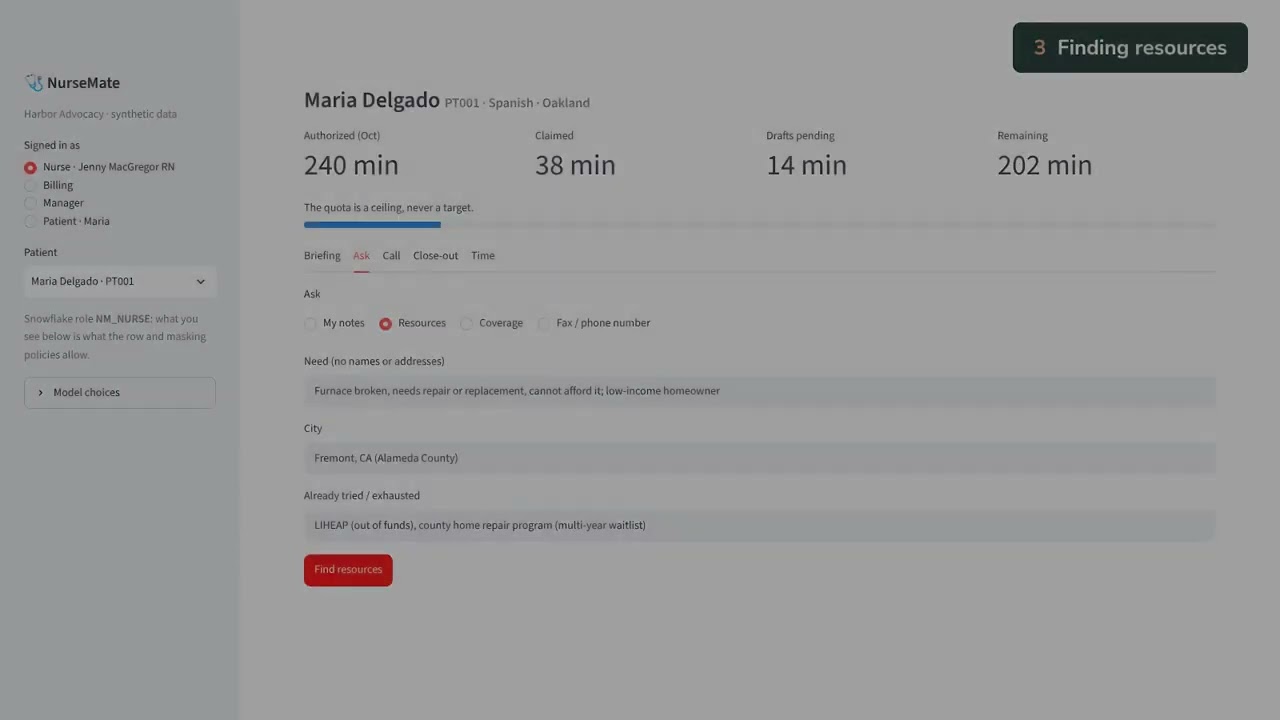
NurseMate is an AI co-worker for nurse advocates, the nurses who sit between patients, doctors and insurers. It was built from a working nurse advocate’s own…
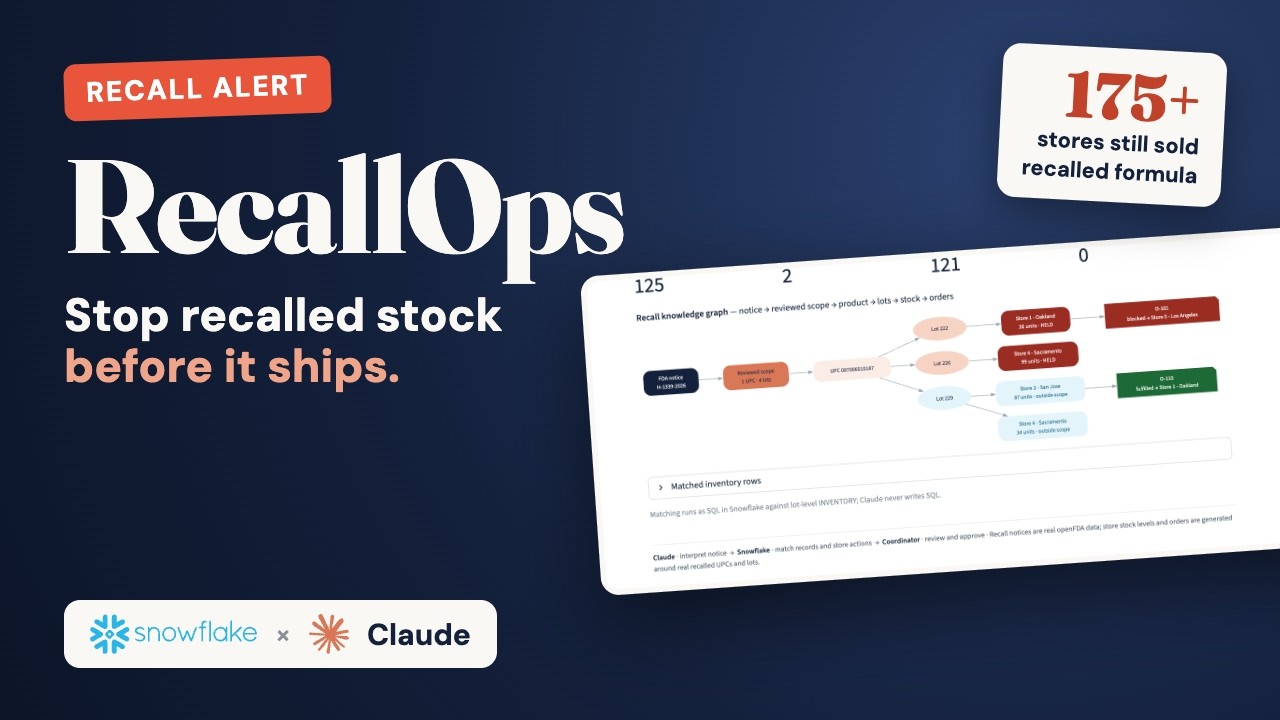
RecallOps helps a grocery chain respond to product recalls. It connects a supplier's or FDA notice to inventory and orders, identifies affected lots, and…
Founders want to grow their business with AI, but they can't delegate to agents they can't trust. The company's knowledge is scattered across CRM, chats and…
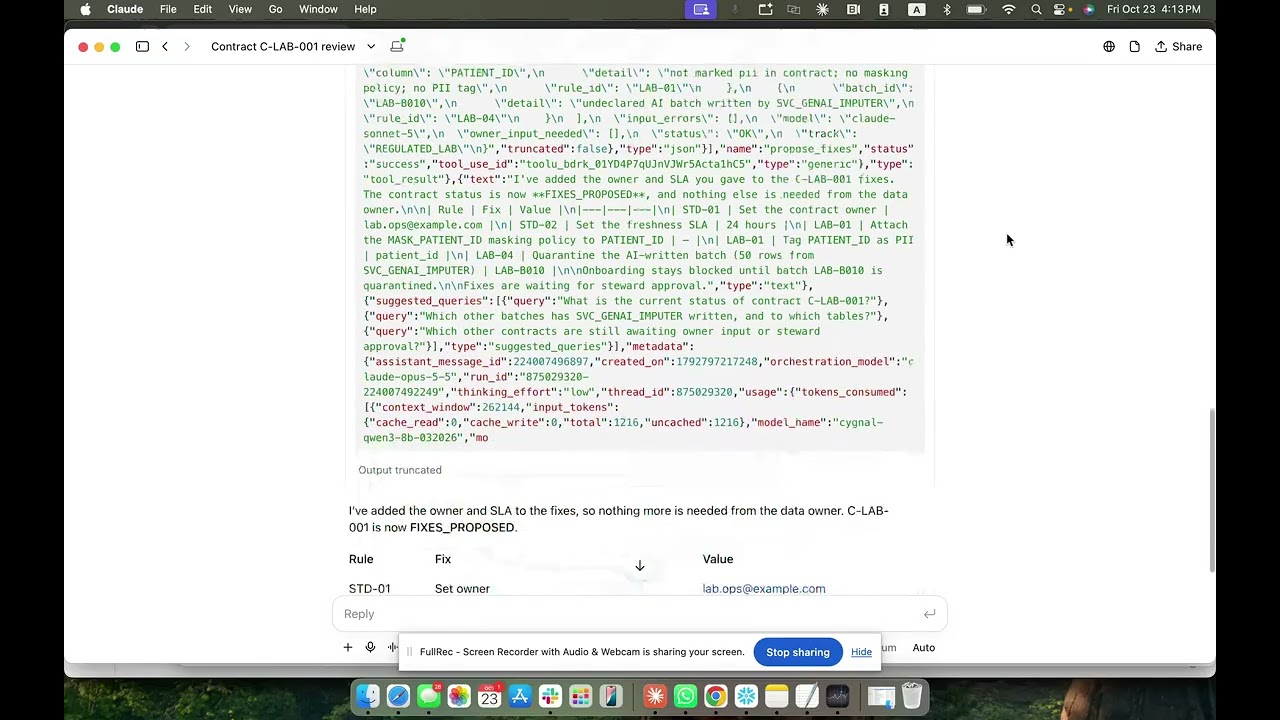
Data Contract Governance Agent is an AI agent on Snowflake that onboards new data products safely. A data owner submits a data contract. The agent routes it…

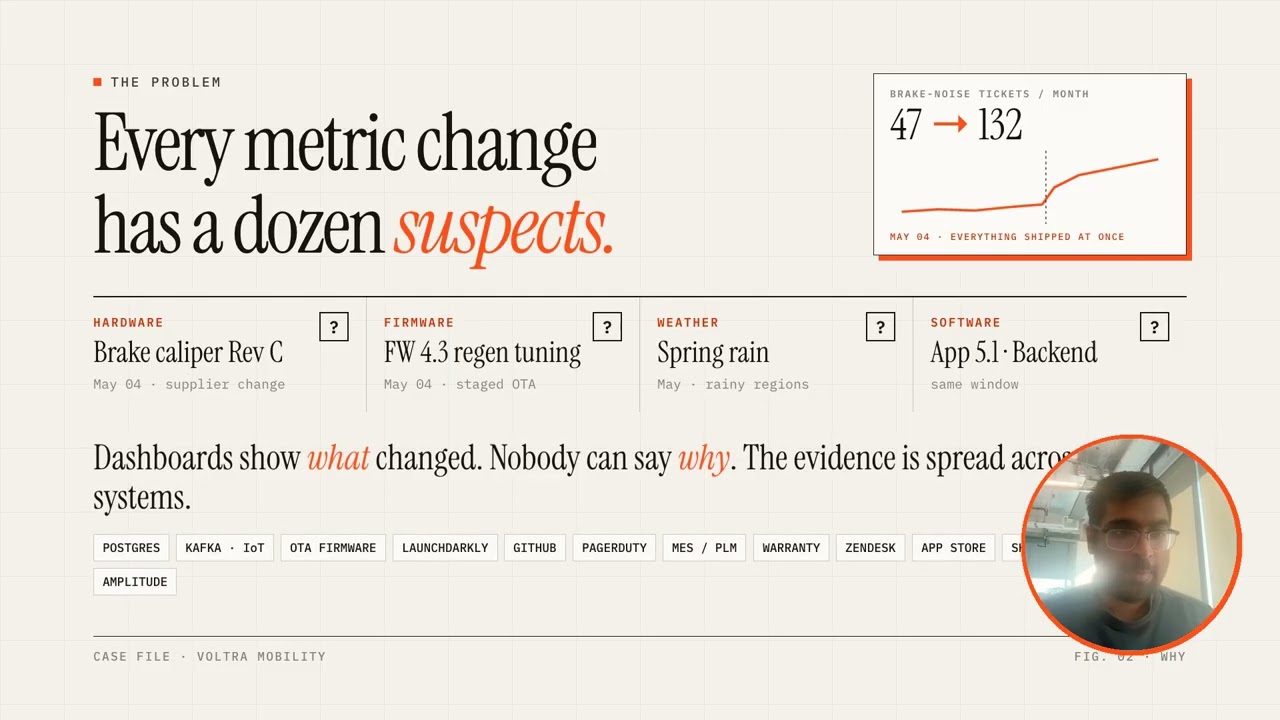
Sherlock is an AI analyst that figures out which release actually caused a change in your business metrics, whether software, hardware or something else, by…