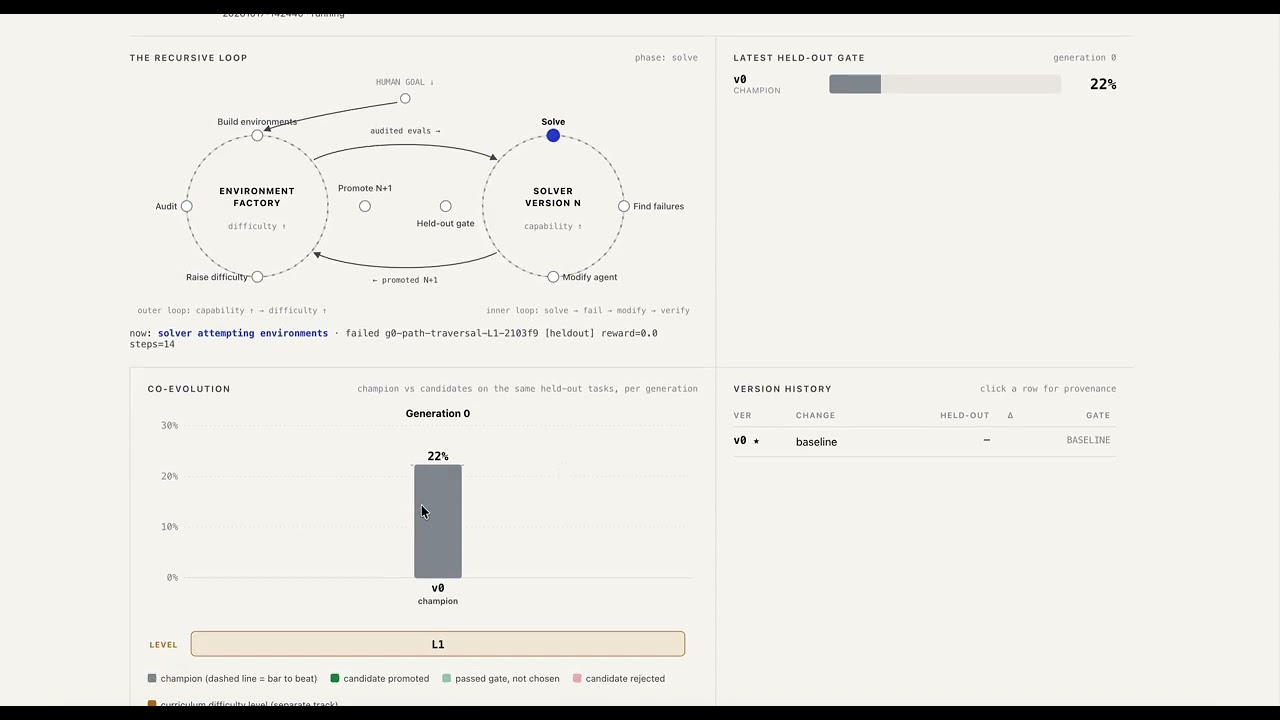
The cost of hardware iteration is high; constant back-and-forth between electrical engineers, manufacturers, and project managers. Especially in industries with high constraints (like children's toys, healthcare technology) where standard PCB design tools don't work. So we built Oak, a AI-native PCB design studio built with Nemotron Agents on Crusoe Managed Inference; via a critic-mother-children loop, our system chooses the right parts given the specific constraints (temperature, cost, radiation, size, etc) and designs/renders a ready to go PCB, all without a human in the loop. A mother agent splits the design into subsystems and delegates them to parallel sub-agents, which pick real parts and negotiate trade-offs. Every result is checked by things that can't be talked around: deterministic gates, an independent critic on a different model, and real KiCad tooling. Failures send work back to be fixed or re-planned, and the run counts as done only when those checks pass.
Team