Proofline
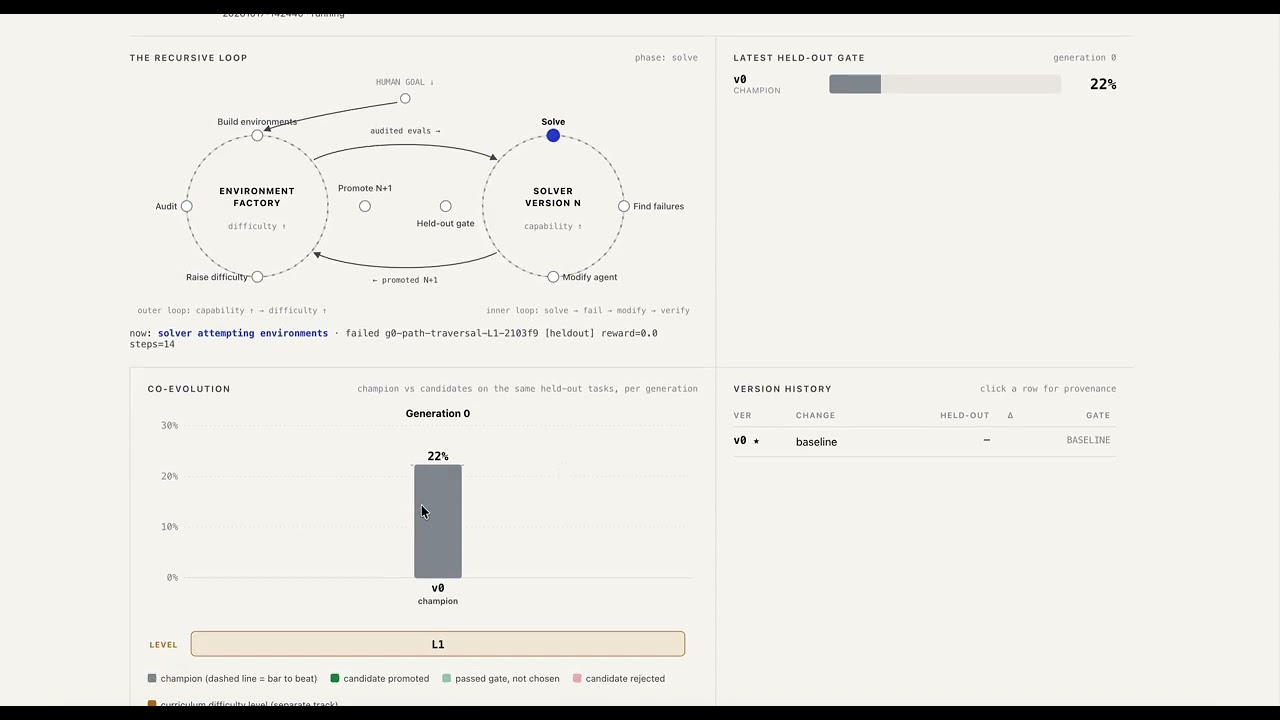
The Recursive Agents HackathonCasefile is a governed recursive-agent system for verifying complex public-record claims across fragmented government and investigative sources. Public investigations often begin with allegations made in hearings, audit reports, indictments, or investigative reporting. Verifying those allegations can require cross-referencing corporate formation records, federal contract awards, subaward disclosures, campaign-finance filings, invoices, regulations, and court records. Conventional research agents frequently return plausible summaries without proving that every material claim was checked—or cite generic homepages and search-result redirects instead of the exact supporting document. Casefile converts a narrative case file into atomic, attributed claims and builds a frozen definition of done for each investigation. NVIDIA Nemotron models running through Crusoe Managed Inference investigate each claim, while deterministic code—not the language model—checks whether the required sources, entities, dates, amounts, evidence spans, and policy conditions were actually covered. You.com Search discovers relevant sources, and You.com Contents retrieves the exact canonical URLs used as evidence. If the evidence is incomplete, Casefile refuses to declare success and performs a bounded, targeted replan. The Records Mode benchmark includes public cases such as the Fat Leonard Navy procurement scandal, the Randy Cunningham defense-contract bribery case, Mississippi TANF fund diversion, the Martin Kao/Navatek campaign-finance investigation, and procurement patterns such as Whitefish Energy and 8(a) subcontracting pass-throughs. Casefile validates the individual documentary assertions in these files without making automatic legal conclusions. Every claim, source, evidence span, verification check, agent event, and final disposition is persisted in Supabase with an auditable trail. Completed investigations become episodic memory. Casefile’s governed Version N+1 loop clusters deterministic verification failures, proposes one narrowly scoped procedural improvement, compares Version N against N+1 on an untouched evaluation split, and promotes the improvement to certified procedural memory only after measurable improvement and independent approval. Models may improve research procedures, but they cannot rewrite policies, verification rules, tool permissions, or the final disposition gate. Casefile’s governing principle is simple: an agent that cannot prove it is done does not get to say it is done.