last_me
Built at Built with Opus 4.7: a Claude Code hackathon · Apr 21, 2026 · Remote
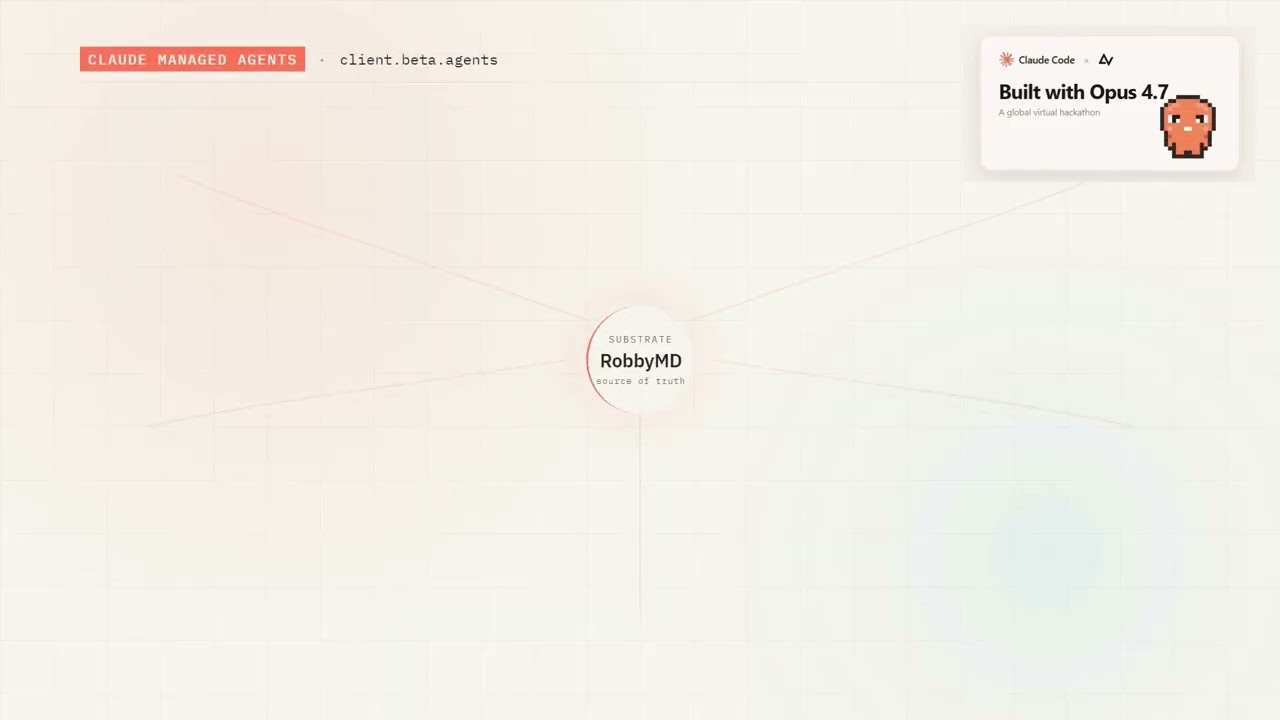
RobbyMD is a doctor-steered diagnostic trace for clinical encounters. Most clinical AI tools produce a transcript, summary, or note. RobbyMD focuses on the missing layer behind the note: the reasoning path. It converts a live doctor-patient conversation into timestamped turns, structured clinical claims, correction edges, working differentials, discriminating questions, and provenance-backed SOAP drafts. The core problem is that physicians already reason during encounters, but the trace is usually lost. If a patient corrects a prior statement, if one answer changes the differential, or if a question rules down a branch, that reasoning path is often reconstructed from memory after the visit. RobbyMD preserves it as structured, inspectable state. The physician remains in control. RobbyMD does not diagnose, prescribe, order, triage, or recommend treatment. It surfaces relevant claims, tracks superseded or excluded evidence, updates deterministic differential projections, suggests next-best discriminating questions, and drafts SOAP only from active claims with provenance. The technical bet is simple: Claude should handle language understanding and phrasing, while the substrate handles auditability. Opus 4.7 extracts structured claims, phrases questions, and drafts note sentences. The deterministic substrate validates, stores, links, supersedes, ranks, and preserves the clinical trace. RobbyMD is a research prototype, not a medical device. The demo uses synthetic or benchmark data only. Its goal is to show what comes after medical scribes: not just better notes, but a physician-steered reasoning substrate behind the clinical note.