**Cross-turn reasoning, rendered live. Both sides leave with something.** Lacunex runs goal-directed adaptive interviews where structured insight is produced *during* the conversation, not in an overnight report. A Host (subject-matter expert) defines objectives; the platform conducts every turn live, surfaces cross-turn observations the moment they cohere, and at session close hands the participant a reflective takeaway worth keeping. Built by a systems analyst, ten years in. Lacunex closes two gaps real-world interviewing never closes: beginners — analysts, PMs, anyone for whom interviewing is *part* of the job — don't yet know how to run a round well; experienced researchers do, but lack the time to interview enough people for long enough. A four-call Opus 4.7 architecture runs every turn: - **Conductor** — decides the next move from session state and renders the interviewer's turn. - **Meta-Noticing** — observation-only; spots contradictions, hedging, and implied-not-said across turns. Every notice must cite ≥2 distinct transcript anchors (enforced in code, not just in prompt). - **Extraction** (Haiku 4.5) — schema-bound; fills the host's live insight dashboard turn-by-turn. - **Takeaway Synthesis** — a reflective artifact for the participant, including a "what you already have that is relevant" section. Mapped against Anthropic's *Building Effective Agents* (Schluntz & Zhang, Dec 2024): **three of the five patterns layer on a single turn — Orchestrator-Workers, Parallelization, Routing.** Three domain briefs ship — **Founder Investment Evaluation**, **Post-Incident Witness**, **Civic Consultation** — plus **Brief Designer**, where the platform interviews the host to author a *new* brief using the same four calls. Recursive dog-food. **Audiences exercised during build:** VC and angel investors evaluating founders; city officials running civic consultations; SREs, safety officers and clinical QI managers conducting post-incident interviews; clinicians eliciting patient values; tacit-knowledge capture from retiring experts; consumer-insights teams; qualitative researchers; managers preparing for high-stakes conversations. Empirical scale, on a **simulated 11-resident cohort** run against the Civic Consultation brief on the real platform: **303 turns, 54 deployed `◆` cross-turn observations from 243 considered, 12 cohort patterns, 6 routing recommendations.** Cost with prompt caching: **~$1–2 per session**, under $5 for the cross-cohort aggregate — putting a 100-resident consultation at ~$150 end-to-end. **Not an overnight research moderator** (Outset, Listen Labs, Strella ship next-day reports). **Not a transcript analyser** (Dovetail, Condens ingest transcripts that already exist). **Not "Claude with a long system prompt"** — a single chatbot can't enforce cross-turn reasoning the way four calls with code-enforced turn anchors can.
More from Built with Opus 4.7: a Claude Code hackathon
Medkit is a virtual clinic that lets you make every mistake before the real patients come. It's a voice-first AI simulator for medical students and newly…

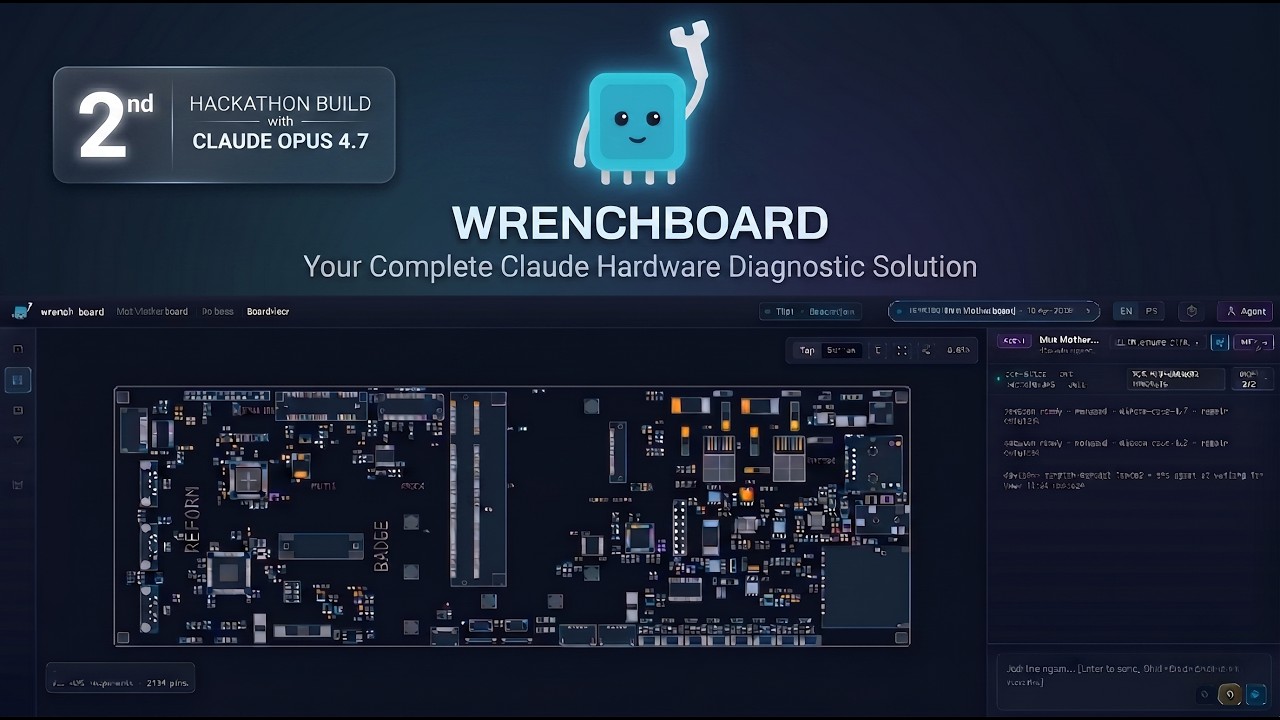
Every year, 50 million tons of electronics become waste — not because they can't be repaired, but because board-level expertise is locked in a few hands…

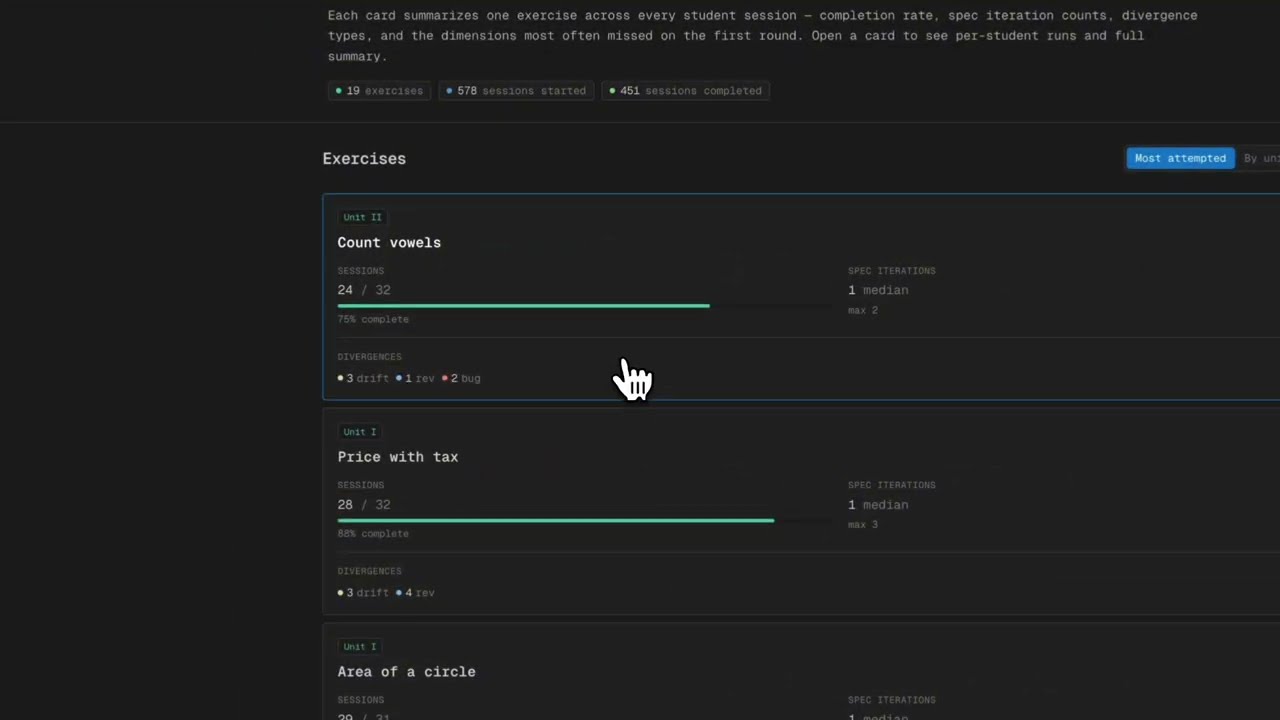
Maieutic flips the role an LLM usually plays in learning to program. Instead of handing the student working code, it guides them to think first about what the…
OmniBridge is an AI agent that identifies unknown serial device protocols autonomously — a workflow that didn't exist a year ago because it needs Opus 4.7's…

ARIA captures the floor operator's knowledge and puts it to work. Drop in the manufacturer's PDF, answer some calibration questions, and you're live in ten…


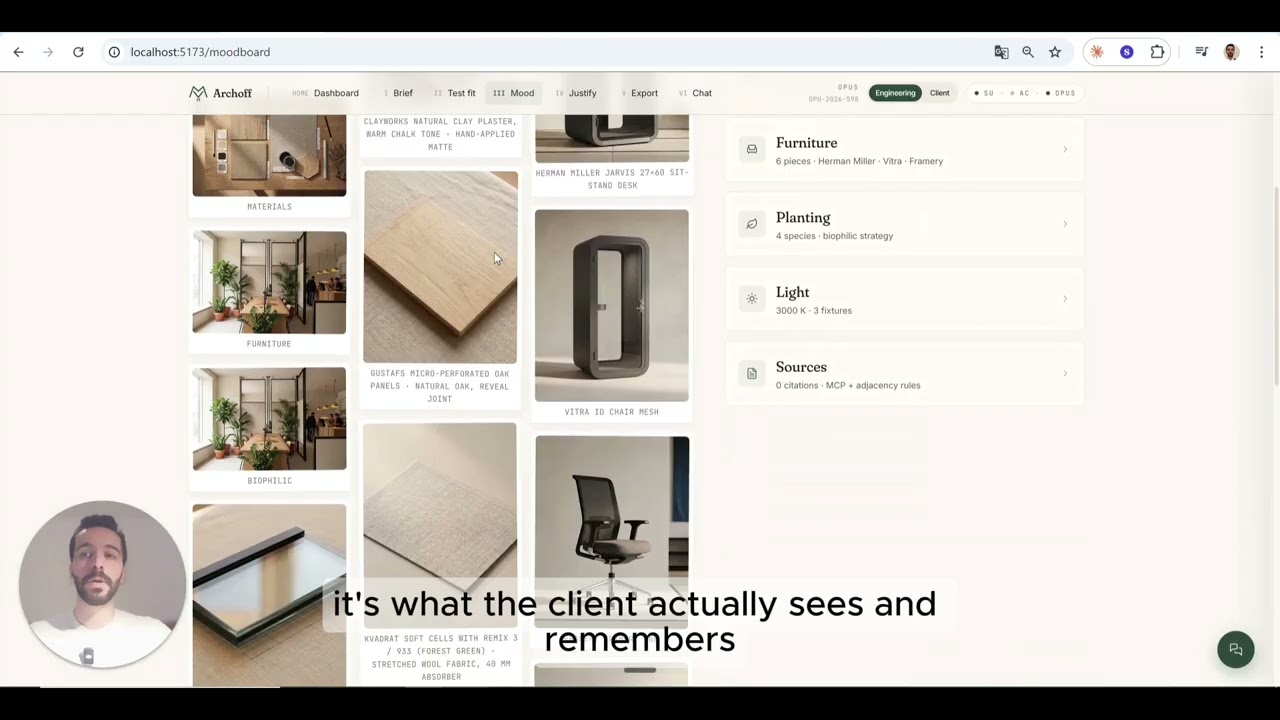
Interior architects in France designing offices for banks, law firms and consulting groups are leaving money on the table. Each one handles only one or two…