Skip to Main Content

Thought to Reality turns a natural-language request into a mechanical part or a full product. A designer model writes parametric CAD; an independent critic and a MuJoCo physics verifier that never reads the designer's notes check fit and load; failed checks go back for a repair round. Across parts, skill versions are adopted only if they beat a held-out set. Moving products such as a mini robot dog also get trained RL policies. Built with Gemini, Meta Muse, Fetch.ai, Subquadratic, and MongoDB at the AIE Code Summit Hackathon.

Team

More from AIE Code Summit 2026 Hackathon

Labbit is a minimal live robotic-hand workbench and a reproducible simulation dataset factory. The goal is 100,000 useful, diverse 20-second episodes of…

Labbit project preview

A lot of what you send a coding agent is easy - “yes, push it”, “commit it”. Sending that to a cheap model sounds smart, but every switch kills the prompt…

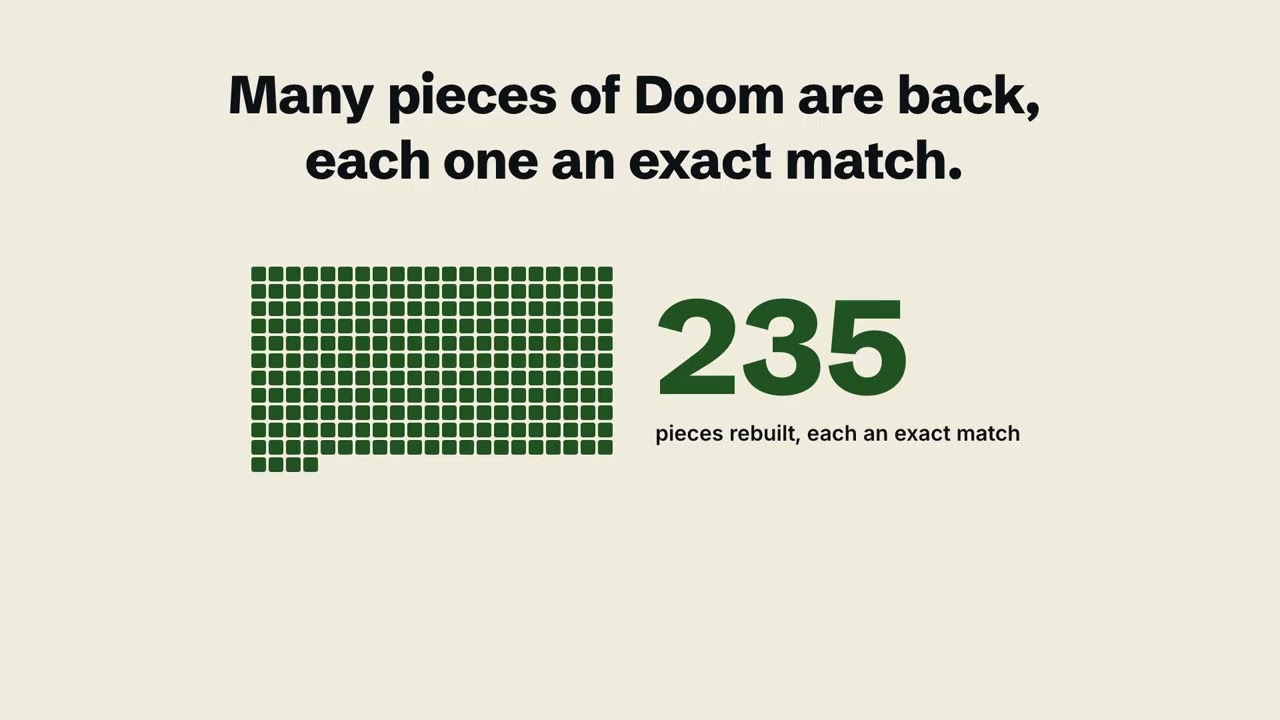
Frankenstein brings back the lost source code of classic games by rewriting it, byte-for-byte. Meta's Muse reads a game's compiled cartridge and rewrites the…

Frankenstein project preview

Self improving editing software for short form content. "one must imagine Sisyphus editing"

Sisyphus project preview

Clean Room rebuilds software by watching it. No source code, no decompiler, no peeking under the hood. You show it an app running, a phone calculator, a…

ShriAli project preview

child-1 makes LLM decode faster on the Qualcomm Hexagon NPU and proves every speedup on a real phone. It optimizes llama.cpp's Hexagon NPU backend…

Child1 project preview