Game Archaeologist
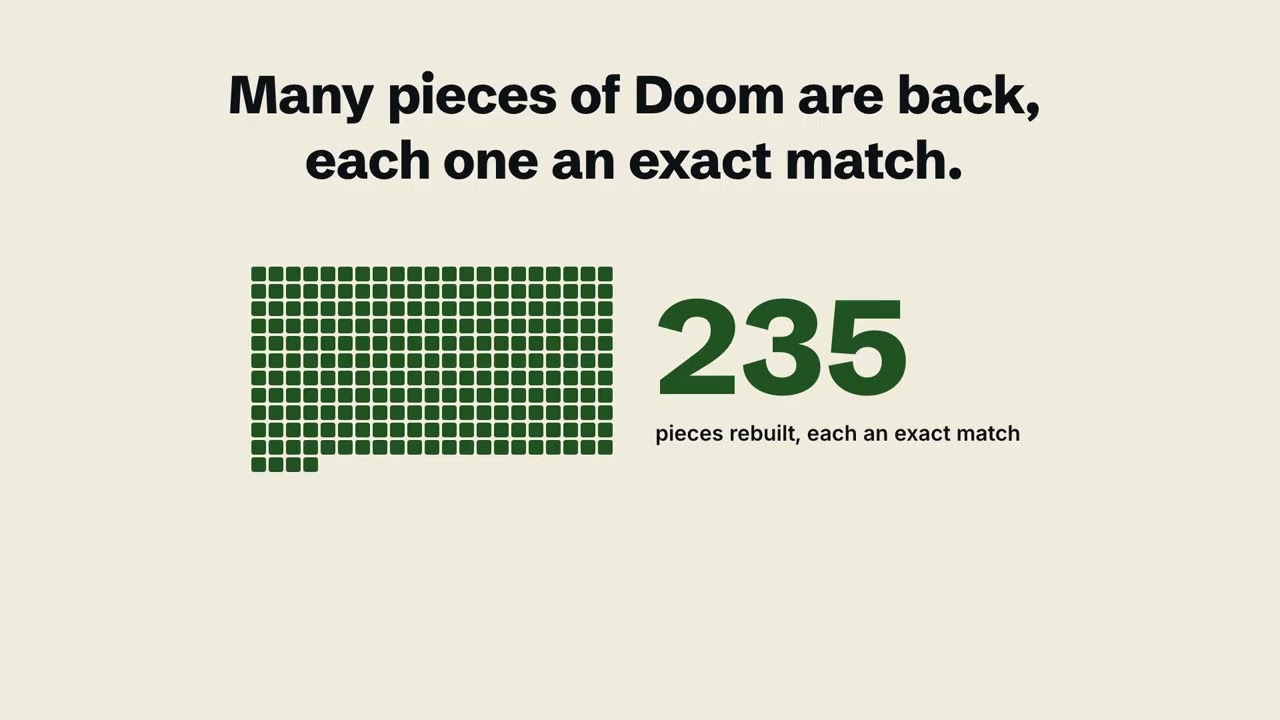
AIE Code Summit 2026 HackathonGame Archaeologist turns a compiled game into readable, editable code without using its source. Meta's Muse Spark investigates the ROM through disassembly, memory inspection and experiments, then writes and corrects a JavaScript reconstruction. A deterministic verifier—not an AI vision model—runs the original and rewrite on identical inputs and compares every pixel. Br8kout matched 90,000/90,000 steps across 30 unseen runs after the verifier caught a five-pixel mistake. Players can compare the original with a modern remake, then ask Meta to change a rule in plain English; a mod report tracks direct and downstream state differences. Larger games currently have matching opening screens but incomplete gameplay recovery. Built during the hackathon: our emulator, investigation harness, Meta agent, verifier, mod builder and playable demo. Uses CC0 game ROMs. Code, findings and run logs are public. Software Archaeology track; solo entry by Ali Zhumataev.
Team